Deutsch
 Türkçe
 Nederlands
 Français
 Svenska

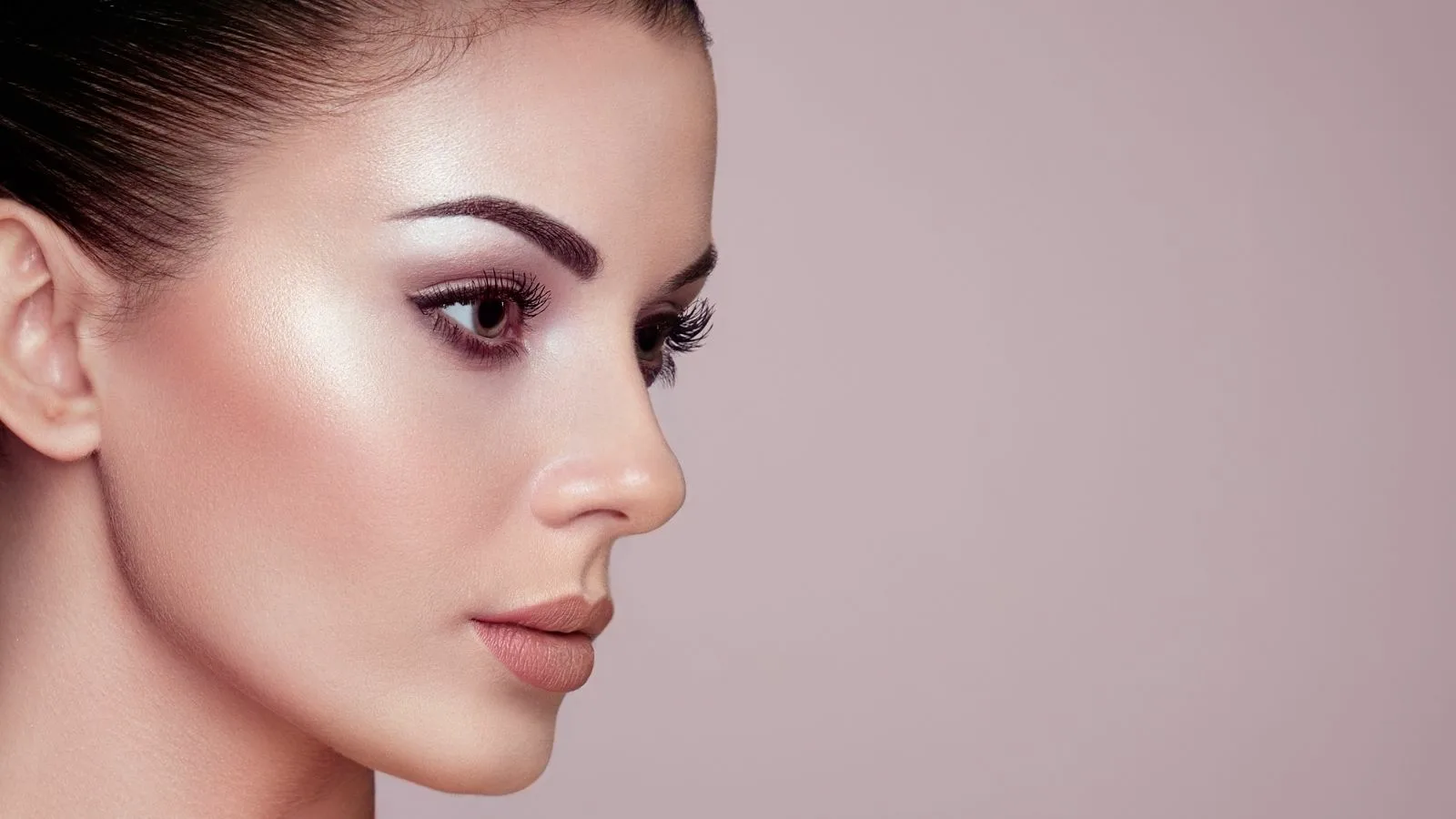
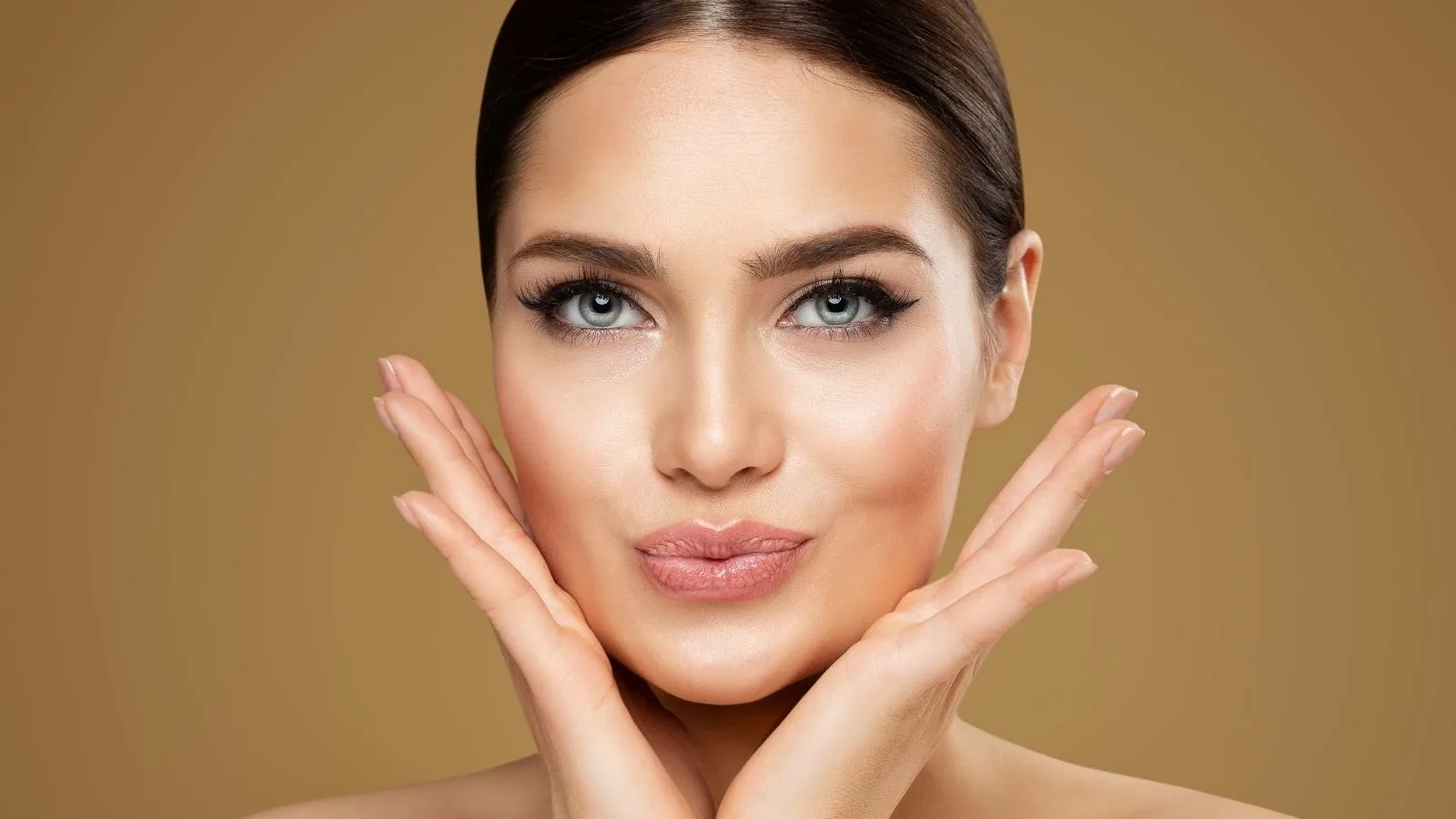
A heart-shaped face is characterized by a broad forehead, prominent cheekbones, and a tapered, pointed chin. The forehead is the widest part of the face, while the chin is narrow and sharp. This face type resembles an inverted triangle and conveys a youthful, energetic appearance.
To establish aesthetic balance in a heart-shaped face, the focus is usually on the lower face. Chin fillers can be used to strengthen the jawline and broaden the lower face, resulting in more balanced facial proportions and improved symmetry.
In this facial type, although the cheekbones are prominent, the volume in the cheeks may diminish over time. In such cases, dermal fillers can support the midface to maintain the natural contour. Small touches in the under-eye area can also soften the overall expression.
Hairstyle and makeup choices for heart-shaped faces should aim to balance the facial proportions. To offset the broad forehead, bangs or a side part are recommended. In aesthetic planning, the priority is to support the lower face and soften angular features.
| Things You Should Know | Information |
| Definition | The heart-shaped face is defined by a wide forehead and prominent cheekbones that taper into a narrow, pointed chin. The face generally appears as an inverted triangle—wider at the top and narrowing downward. |
| Characteristic Features | Broad forehead, prominent cheekbones, narrow and pointed chin. The forehead-to-chin ratio is distinct. |
| Aesthetic Appearance | Creates a feminine and youthful expression; in some cases, a very sharp chin may disrupt facial balance. |
| Aesthetic Procedures | The lower face can be balanced with chin fillers. The cheek area can be volumized. Botox in the forehead can create smoother transitions. |
| Surgical Intervention | Rarely required; balance can be achieved with chin tip aesthetics (genioplasty) or fat grafting. |
| Makeup Tips | Contouring along the sides of the forehead can reduce width, while highlighting the chin brings attention to the lower face. |
| Haircut Compatibility | Styles with bangs or side parts that soften the broad forehead are ideal. Cuts ending at the chin level are usually avoided. |
| Common Celebrities (e.g.) | Scarlett Johansson, Reese Witherspoon, and Naomi Campbell are examples of individuals with heart-shaped faces. |
| Aging Effects | Cheek volume may decrease, and the sharpness of the chin can become more pronounced—this can be corrected with aesthetic procedures. |
What Is a Heart-Shaped Face and Why Is It Aesthetically Valuable?
When we talk about facial shapes in terms of aesthetic perception, our brain automatically scans certain visual codes. The heart-shaped face strongly aligns with one of the most powerful of these codes — the “Triangle of Youth.” You can imagine this as an inverted triangle: the base is at the top (around the eyes and cheekbones), and the pointed tip is at the bottom (the chin).
The aesthetic value of this shape lies in the illusion it creates. A wide and full upper face draws attention upward — toward the eyes. A narrow and delicate chin elongates the neck and removes the heaviness from the facial structure. In this form, the foundation of the face is light while the upper structure is strong. This combination gives the face a look that is both powerful and deeply feminine. For physicians, the heart-shaped face is valuable because it represents an anatomy that has not yet succumbed to gravity. Thus, in many aesthetic procedures, our ultimate goal is to move our patients closer to this dynamic geometry.
How Can a Heart-Shaped Face Be Identified Through Self-Examination?
You don’t need sophisticated 3D scanning devices to determine your face shape — a well-lit mirror and some careful observation are enough. As professionals, we assess specific reference points when analyzing a face. You can do the same by brushing your hair completely away and examining the following areas:
Key features that distinguish a heart-shaped face:
- Broad forehead structure
- Prominent temple regions
- High cheekbones
- Tapered jawline
- Pointed chin tip
- Slender neck transition
If your forehead is one of the widest parts of your face and your hairline forms a slight “V” in the middle (a classic heart shape, but not essential), you’ve identified the first clue. Moving downward, if your cheekbones are the most prominent and widest point of your face, that’s your second criterion. The most critical feature is the lower face. If the line from the cheeks to the chin narrows gracefully rather than being angular or blunt, and your chin ends in a distinctly pointed tip, your face is likely heart-shaped. Unlike square or rectangular faces, the jaw corners (mandibular angles) in this shape are very soft or absent.
How Does Aging Affect the Heart-Shaped Face?
Unfortunately, in aesthetic surgery, aging is often described as “an endless battle with gravity.” The youthful inverted triangle — the heart shape — deforms and inverts over time. This transformation is what we refer to as the “Aging Pyramid.” The base of the triangle drops down to the jawline, while the pointed tip moves upward to the midface.
The mechanism behind this change is simple, but its results are dramatic. Especially in the 40s and 50s, the deep fat pads that give the face a youthful and firm look begin to shrink and shift. The tissues above the cheekbones — the core of the heart shape — begin to diminish. This volume loss causes the skin to lose its support. Without support, the skin yields to gravity and slides downward.
The unfortunate area where these sagging tissues accumulate is the narrowest point of the face: the jawline. Sagging in this area, often referred to as “jowls,” makes the jaw appear wider and more square. The once delicate and narrow jawline takes on a heavy and broad appearance. As a result, the aesthetic contrast between the cheekbones and chin tip disappears. The face loses its lively, energetic expression and takes on a more tired and somber appearance. The main objective of aesthetic procedures is to reverse this process and restore the triangle to its youthful orientation.
Why Are Cheekbones Crucial in the Heart Face Shape?
Cheekbones (malar area) are the structural columns of the face. Think of a tent — the more upright and strong the poles are, the more taut and smooth the fabric appears. The cheekbones serve this same purpose for the skin and soft tissues of the face.
The defining feature of the heart-shaped face is the width and forward projection of the cheekbones. Inadequate or flat cheekbones can make the face appear plain, tired, and expressionless. Additionally, a deficiency in the midface can accentuate under-eye bags and deepen the nasolabial folds (the lines running from the nose to the mouth corners).
In the ideal heart shape, the cheekbones expand laterally in a graceful curve. This lateral width creates a powerful optical illusion that makes the lower part of the face appear slimmer. Sometimes, patients complain that their chin appears wide, when in fact the real issue is underdeveloped cheekbones. When we widen the upper face, the lower face automatically looks more delicate. That’s why we always begin building the heart shape from the midface.
How Are Cheekbones Enhanced Surgically?
When the goal is to achieve a permanent, structural, and lifelong heart-shaped face, surgical methods are undeniably the most effective solution. Although the word “surgery” can be intimidating to some patients, these procedures have become highly comfortable and safe in modern practice. Cheekbone augmentation is the cornerstone of this transformation.
The main surgical materials we use to shape this area include:
- Silicone implants
- Polyethylene prostheses (Medpor)
- Custom 3D-designed implants
- The patient’s own bone tissue
The procedure is typically performed through small incisions inside the mouth, which means there are no visible scars on the face. The selected implant is placed over the cheekbone beneath the periosteum (bone covering) and is fixed in place. This placement prevents the implant from shifting and gives it the feel of natural bone to the touch. From the outside, no one will suspect a prosthetic — only that the person has strong, defined bone structure.
In more complex cases — particularly in patients with asymmetry or significant developmental deficiencies in bone structure — we may perform a Zygomatic Osteotomy. In this technique, the cheekbone is carefully cut and repositioned outward or forward. These advanced procedures provide not just volume but also three-dimensional skeletal improvement.
Can You Have a Heart Shape Without a Slim Lower Face and Defined Jawline?
The answer is a definite no. The heart-shaped face is a composition of contrasts; just as the upper width is essential, the slimness of the lower face is equally vital. No matter how prominent your cheekbones are, if your lower jaw is wide, muscular, or blunt, the result will be a strong square face rather than a heart-shaped one.
To achieve feminine elegance and the desired “V” shape, the jawline must taper gracefully from the cheekbones to the chin tip. That’s why we never overlook the lower face during evaluation. If the corners of the jawbone protrude outward, if the masseter muscles are overly developed, or if the chin tip is too broad, reaching the ideal geometry is impossible without addressing these areas. Slimming the lower face changes the overall aura of the face, making it look softer and more youthful.
What Do V-Line Surgery and Chin Aesthetics Involve?
“V-Line” is a term that originated in Asia and has become globally recognized as a set of surgical procedures aimed at shaping the lower face into a “V” form. These surgeries are the art of reshaping the facial skeleton and are fully personalized. Every individual has a unique bone structure, so the necessary procedures vary from patient to patient.
The procedures we perform in this context include:
- Mandibular ostectomy (jaw corner shaving)
- Genioplasty (chin tip aesthetics)
- T-osteotomy (narrowing the chin tip)
- Advancing or setting back the chin tip
- Submental liposuction (under-chin fat removal)
For patients with very pronounced jaw corners, we access the area from inside the mouth to shave or cut down the excess bone. This immediately narrows the face when viewed from the front. Sometimes, however, the issue is not the corners but the chin itself. If the chin is too broad or blunt, we cut and narrow the bone through the centerline to create a more refined point. If the chin is recessed (retrognathia), we move the bone forward or use an implant to balance the profile. All of these procedures make the lower half of the face more compact and delicate, enhancing the impact of the cheekbones above.
How Does a Temporal Lift Help Harmonize the Upper Face?
When we consider the heart-shaped face as a whole, the upper face — particularly the temples and eyebrows — completes the overall framework. Focusing only on the cheekbones and chin may sometimes fall short. As we age, the outer parts of the eyebrows and the temple tissues begin to droop. This causes the eyes to look tired and erases the lifted, energetic appearance of the face.
Temporal Lift (Temple Lift) is a highly strategic intervention at this point. Through incisions hidden within the hairline, we lift the temple area and the outer tails of the eyebrows upward and outward. This gives the eyes a more almond-like, attractive appearance while also correcting hollowness in the temples. Firm and full temples create a smooth transition between the forehead and cheekbones. This tension in the upper boundary of the heart shape injects dynamism into the face. Remember: the heart-shaped face is not just about bone structure, but also about the upward positioning of the soft tissues.
Is a Heart-Shaped Face Possible Without Surgery?
For patients who are not ready for surgery, lack the time for recovery, or have only early-stage deformities, medical aesthetics offers excellent alternatives. These procedures, known as “Non-Surgical Facial Contouring” or “Liquid Facelift,” can create impressive illusions in skilled hands.
The main tools we use for this purpose include:
- Hyaluronic acid fillers
- Calcium hydroxyapatite fillers (Mineral injections)
- Fat grafting (technically a minor surgical procedure)
- Enzymatic lipolysis (fat dissolving)
Our strategy here is based on camouflage and balance. Using thick-consistency fillers in the cheekbones, we create volume and projection that mimic the effect of an implant. This elevates the midface. By adding filler to the chin tip, we elongate and sharpen the chin, enhancing the “V” effect.
In the lower face, Botox is our biggest ally. Injections into the masseter (chewing) muscles reduce their volume and slim down the lower face. Additionally, fat-dissolving enzymes or skin-tightening devices in the submental (under-chin) area help define the jawline. These combined approaches are the most practical way to simulate a heart-shaped face without going under the knife.
How Effective Are Thread Lifts in Creating a Heart-Shaped Face?
Thread lifting has firmly established itself as a go-to procedure between surgical and filler-based approaches in recent years. It’s an excellent intermediate solution, especially for patients with mild sagging in the midface who want more defined cheekbones.
The materials we use for this procedure include:
- PDO (Polydioxanone) threads
- PLA (Polylactic acid) threads
- Silicone-coated permanent threads
- Barbed or coned threads
The principle of this treatment is based on the mechanical suspension of tissues using special threads placed under the skin. When these threads are inserted along the cheekbone line and pulled upward, the tired look of the cheeks disappears instantly, and the cheekbones become more prominent. Threads placed along the jawline help define the “jawline” and reduce sagging skin. While thread lifts are not as radical or permanent as surgery, in properly selected patients they create an immediate “Heart-Shaped Face” effect. Moreover, the collagen production stimulated around the threads enhances skin quality over time.
What Is Facial Stylization and Why Must It Be Personalized?
In aesthetic medicine, stylization refers to the art of transforming existing features into an ideal form. The most critical point to highlight here is: Every face is unique, like a fingerprint. A chin that looks perfect on one person may appear “witch-like” on another. Therefore, when creating a heart-shaped face, we cannot proceed with a one-size-fits-all, copy-paste mentality.
In the stylization process, we consider the following factors:
- Ethnicity
- Skin quality and thickness
- Existing bone structure
- Age and lifestyle
- Face length-to-width ratio
For example, elongating the chin in a patient who already has a long face may create imbalance. Instead, expanding the cheekbones laterally can restore proportion. In round-faced individuals, merely sharpening the chin may not suffice — cheek fat pads may need to be reduced through buccal fat removal (bichectomy). Our goal isn’t just to add or remove volume, but to control light and shadow play across the face. An ideal heart-shaped face is a 3D work of art where light reflects off the cheekbones, and shadows form under the chin.
What Are the Risks and Recovery Processes of These Procedures?
Transparency is the foundation of the doctor-patient relationship. As with any medical intervention, facial contouring procedures come with their own risks and recovery timelines. Understanding this process in advance enhances patient comfort.
Potential side effects and risks include:
- Temporary swelling and bruising
- Mild asymmetry (usually resolves)
- Infection risk (rare)
- Temporary numbness in sensory nerves
- Implant displacement (very rare in surgery)
- Allergic reactions to filler materials
In surgical procedures (e.g., implants, osteotomies), patients typically require 1 to 2 weeks of social downtime. It may take several months for swelling to fully subside and the face to settle into its final shape. This is a process that demands patience. In contrast, non-surgical procedures offer a much more relaxed recovery. There’s a reason fillers and thread lifts are called “lunch break aesthetics” — patients can often return to work or social life immediately after the procedure, possibly with just a touch of makeup. Regardless of the method chosen, what matters most is that these procedures are performed by an experienced doctor who understands facial anatomy. Even a seemingly simple filler injection can cause serious complications if performed incorrectly, such as vascular occlusion.
Frequently Asked Questions
How is a heart-shaped face defined, and what are its key features?
A heart-shaped face is defined by a broad forehead, prominent cheekbones, and a narrow chin. The face tapers from top to bottom, creating a silhouette that ends in a pointed chin.
Which aesthetic procedures are most suitable for a heart-shaped face?
Chin fillers, forehead contouring, and cheek augmentation can balance facial proportions, creating a more harmonious and softer appearance.
How does the heart-shaped face change with aging?
Cheek volume decreases, skin loses elasticity, and the jawline becomes more pronounced over time — making the lower part of the face appear sharper.
What are the best hairstyles for heart-shaped faces?
Haircuts that add volume near the chin and soften the appearance of the forehead are ideal. Side-swept bangs and layered cuts help balance proportions.
Why is chin aesthetics important for people with heart-shaped faces?
A narrow, pointed chin can make the face look unbalanced. Light chin fillers or contouring help strengthen the lower face and improve symmetry.
How does forehead width influence aesthetic planning in heart-shaped faces?
A broad forehead makes the upper face dominant. Hairline adjustments or contouring fillers can soften the upper contour and improve facial harmony.
Why are cheek fillers preferred in heart-shaped faces?
Even though the cheekbones are prominent, volume loss can occur over time. Fillers can lift the midface and contribute to a youthful, elevated look.
What should be considered in eyebrow shaping for heart-shaped faces?
Softly arched brows reduce harshness. Overly high or flat brows emphasize the forehead and are generally avoided.
Which areas are most effective for filler application in heart-shaped faces?
The chin tip, cheekbones, and nasolabial folds can be filled to balance the lower face and enhance the natural heart-shaped silhouette.
How do aesthetic procedures change facial proportions in heart-shaped faces?
Treatments to the lower face enhance chin balance, while the forehead and cheeks are softened — resulting in a more oval and symmetrical appearance overall.
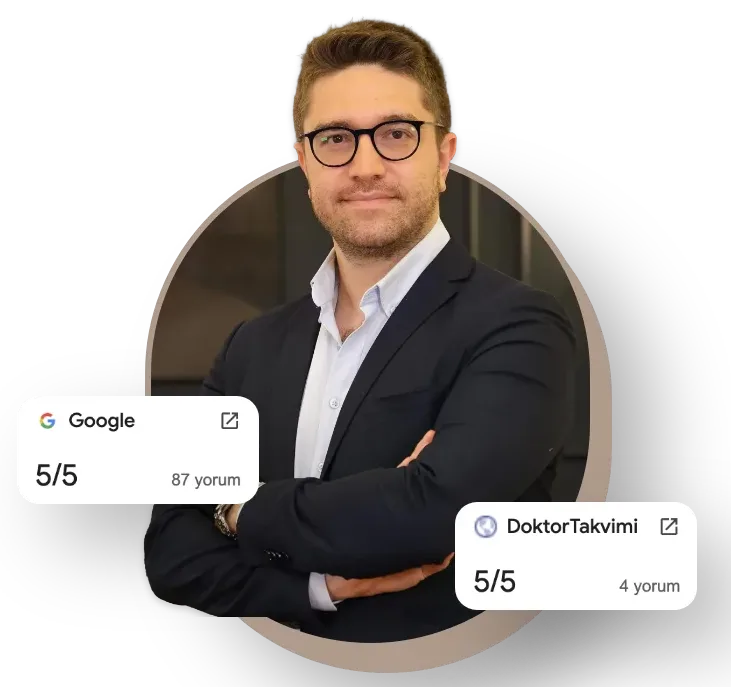
Op. Dr. Erman Ak is an internationally experienced specialist known for facial, breast, and body contouring surgeries in the field of aesthetic surgery. With his natural result–oriented surgical philosophy, modern techniques, and artistic vision, he is among the leading names in aesthetic surgery in Türkiye. A graduate of Hacettepe University Faculty of Medicine, Dr. Ak completed his residency at the Istanbul University Çapa Faculty of Medicine, Department of Plastic, Reconstructive and Aesthetic Surgery.
During his training, he received advanced microsurgery education from Prof. Dr. Fu Chan Wei at the Taiwan Chang Gung Memorial Hospital and was awarded the European Aesthetic Plastic Surgery Qualification by the European Board of Plastic Surgery (EBOPRAS). He also conducted advanced studies on facial and breast aesthetics as an ISAPS fellow at the Villa Bella Clinic (Italy) with Prof. Dr. Giovanni and Chiara Botti.
Op. Dr. Erman Ak approaches aesthetic surgery as a personalized art, tailoring each patient’s treatment according to facial proportions, skin structure, and natural aesthetic harmony. His expertise includes deep-plane face and neck lift, lip lift, buccal fat removal (bichectomy), breast augmentation and lifting, abdominoplasty, liposuction, BBL, and mommy makeover. He currently provides safe, natural, and holistic aesthetic treatments using modern techniques in his private clinic in Istanbul.