Türkçe
The factors that make Turkey a center for the most successful breast augmentation surgeries include physicians’ extensive case experience, international academic accreditations, and the integration of advanced patient-centered surgical protocols. As one of the countries with the highest volume of aesthetic surgery worldwide, Turkey sets global standards in aesthetic outcomes thanks to surgeons’ expertise in managing complex anatomical variations. The JCI-accredited healthcare infrastructure and the seamless integration of innovative technologies into surgical practice maximize operational safety while making the recovery process highly comfortable. This combination creates a global center of surgical excellence that enables patients to achieve natural, aesthetic, and safe results.
Why Is Turkey So Frequently Preferred for Breast Augmentation Surgery?
The most prominent reason why our country has become a globally preferred center in this field is the high number of cases encountered by the surgeons performing these operations. A high case volume allows specialists to become familiar with every type of anatomical variation that may arise during surgery. The human body is not a standardized machine; tissue differences, skeletal asymmetries, and skin elasticity can vary significantly from person to person. Experienced physicians can evaluate these differences before surgery and develop the most suitable solutions for each patient.
The fact that institutional infrastructures have successfully passed independent inspections is also an important source of confidence for patients. Many plastic surgery clinics in Turkey are regularly audited by global organizations. At the same time, physicians’ possession of qualifications that meet European standards demonstrates that medical knowledge and surgical practice are continuously kept up to date. Thanks to specialists who pass these demanding examinations and follow current scientific approaches, patients are able to go through both the decision-making and surgical processes with considerable peace of mind. High satisfaction rates also keep demand consistently strong.
How Is Three-Dimensional Planning Performed Before Breast Augmentation Surgery?
One of the biggest questions in the minds of many people who decide to undergo surgery is what their body will look like after the procedure. In the past, these expectations were generally estimated through photographs of individuals with similar body types or by using trial implants placed inside a bra. Today, however, three-dimensional imaging and simulation systems largely eliminate this visual uncertainty.
With the help of specialized cameras, the patient’s body contours are scanned in detail, and a three-dimensional digital model of the patient is created. This technology not only displays the person’s current condition but also projects the possible postoperative appearance on the screen according to the size, shape, and projection of the planned implant. Millimetric calculations performed on the body measurements help prevent unexpected aesthetic surprises.
The anatomical features measured in detail through simulation systems include:
- Chest wall width
- Existing breast tissue volume
- Structural asymmetries between the breasts
- Elasticity of the skin layer
This digital infrastructure makes it considerably easier for the patient to clarify aesthetic expectations before surgery and feel more psychologically prepared. In addition to surgical planning, the general health of the tissue is evaluated in detail through radiological examinations, with the aim of ensuring that the operation proceeds on a safe medical foundation.
In Which Anatomical Areas Is the Implant Placed During Breast Augmentation Surgery?
The anatomical pocket in which the silicone implant is positioned within the body closely affects both the aesthetic outcome and the postoperative recovery process. Each patient has a different subcutaneous tissue thickness, chest muscle structure, and level of physical activity in daily life. Therefore, a single standard surgical placement plan may not be suitable for every patient. To achieve aesthetic success, the option most appropriate for the individual’s body must be selected.
The main implant placement planes are as follows:
- Subglandular placement
- Subfascial placement
- Submuscular placement
- Dual-plane placement
If the patient has sufficient natural breast tissue and a fat layer thick enough to conceal the implant, the subglandular method may frequently be preferred. Since the muscles are not disturbed with this technique, recovery generally progresses more quickly. On the other hand, if the patient is very thin, does not regularly engage in heavy exercise, and has thin tissues, submuscular or subfascial placement may be more suitable to prevent the implant from being visible externally. An implant placed beneath the muscle or fascia gains better coverage and creates a more natural appearance. The most appropriate plane is determined during the examination through tissue measurements.
What Is the Dual Plane Technique Used in Breast Augmentation Surgery?
The dual plane technique used in breast augmentation surgery is a specialized surgical approach designed to combine the advantages of both submuscular and subglandular methods. In traditional submuscular placement, the breast may move upward during weightlifting or intense exercise, while in purely subglandular placement, implant edges may become visible in thin patients. The Dual Plane technique largely overcomes these anatomical limitations and provides both the surgeon and the patient with a more flexible solution.
In this technique, the lower borders of the chest muscle are gently released to a specific extent, allowing the implant to adapt to two different anatomical planes at the same time. The upper part of the implant remains beneath the chest muscle, while the lower part is positioned directly behind the existing breast tissue. Keeping the upper portion under the muscle creates a very soft transition in the décolletage area and greatly helps prevent the implant edges from being visible externally. Releasing the lower portion gives the breast a highly natural, teardrop-like form and significantly reduces sudden displacement caused by muscle movement. It is an especially popular method for patients with mild sagging, as it can provide a fuller shape without the need for an additional breast lift procedure.
For Whom Is Hybrid Breast Augmentation Surgery a More Ideal Option?
There are patient groups for whom using only a silicone implant or performing only regional fat injection may be insufficient to meet expectations. In such cases, hybrid methods that combine the advantages of both techniques come into play. The implant provides the required breast volume, while the surrounding tissues are supported with the patient’s own fat cells.
Fat tissue harvested from areas such as the abdomen, waist, or hips is processed and purified. The resulting pure fat cells are transferred beneath the skin and between the tissues of the breast area. In this way, the implant is cushioned with living tissue and gains a much softer feel.
The patient profiles for whom the hybrid approach is particularly recommended include:
- Thin patients
- Individuals with a thin skin layer
- Those with significant asymmetry
- Individuals with chest wall irregularities
Some of the transferred fat cells may naturally be absorbed over time, but the remaining cells integrate with the vascular network and become permanent. Thanks to the regenerative properties of fat tissue, a noticeable improvement in skin quality is also highly possible.
How Are Minimally Invasive Methods with Small Incisions Applied in Breast Augmentation Surgery?
Modern surgical approaches aim to preserve tissue integrity during the operation and minimize damage to surrounding structures as much as possible. While traditional surgical procedures require wider incisions, minimally invasive methods allow the process to be managed more delicately, through smaller incisions and in a more practical manner. These contemporary approaches are specifically designed to improve postoperative patient comfort.
Instead of advancing by cutting tissues with standard instruments, specially designed tools are used to separate natural anatomical fascial planes. This allows capillary vessels and nerve networks in the surgical area to be largely preserved, reducing bleeding and significantly alleviating postoperative complaints such as swelling, tightness, and bruising.
The pocket in which the implant will be placed is prepared using slowly inflated balloon-like devices rather than aggressive medical manipulation. This gently stretches the tissues and creates an appropriate space while preventing damage to the muscle fibers. The selected silicone implant is then inserted through a very small incision measuring only a few centimeters using special funnel systems, without touching the skin or air. This technique reduces possible risks, minimizes the amount of scarring, and helps the patient return to daily routines and social life much more quickly.
How Is Pain Managed During the Recovery Period After Breast Augmentation Surgery?
In previous years, one of the main concerns of individuals planning surgery was the possibility of postoperative pain. However, with advanced anesthesia protocols and regional nerve block techniques in modern medicine, the recovery process can now be experienced much more comfortably. Rather than attempting to suppress pain afterward with strong medications, preventive methods that block pain signals from reaching the brain are preferred.
During surgery, the sensory nerves surrounding the chest muscles are safely accessed under detailed ultrasound guidance. Local nerve blocks applied to these areas significantly prevent muscle spasms and regional pain caused by stretching of the muscles. Since the nerve block affects only the pathways carrying pain signals, the muscle functions that allow patients to move their arms are not restricted.
Together with these advanced techniques, the need for powerful painkillers that may cause nausea or weakness after surgery is greatly reduced. Patients generally feel more energetic when they wake up and can walk independently without assistance after a short period. Increased physical comfort also brings psychological relief.
What Should Be Considered During the Recovery Period After Breast Augmentation Surgery?
Successful completion of the operation is only one part of the process of achieving the desired appearance. Postoperative care is equally important for preserving the results for many years and ensuring that the tissues heal properly. The body requires a certain amount of time to adapt to the new structure and eliminate swelling.
With clinical guidance from physicians, there are basic steps that patients should follow during the first weeks. The main considerations for accelerating recovery include:
- Resting in a semi-upright position
- Using a special medical bra
- Avoiding strenuous physical activities
- Staying away from environments such as pools and the sea
Mild swelling in the tissues during the first few days is a completely normal response of the body to healing. Resting with the upper body slightly elevated helps this swelling disperse more quickly. Flexible and supportive medical bras used during the early period help maintain the new contours of the breasts while supporting the implant in the correct position.
Patients can generally return comfortably to light daily activities by the end of the first week. However, strenuous fitness movements that engage the chest muscles or heavy physical activities should be postponed for a while. Special massages introduced later under physician supervision help the breasts gradually achieve a more natural feel. Following the recovery schedule recommended by your physician is always the safest approach.
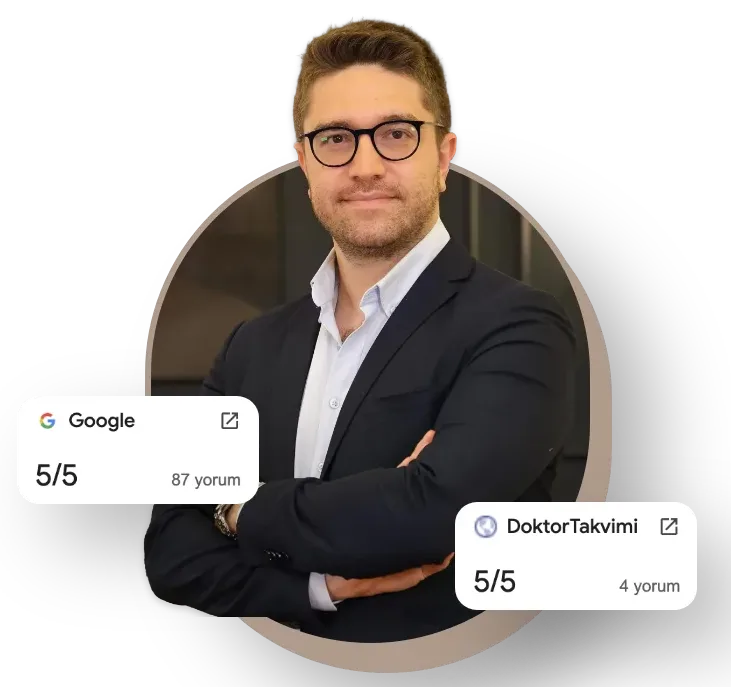
Op. Dr. Erman Ak is an internationally experienced specialist known for facial, breast, and body contouring surgeries in the field of aesthetic surgery. With his natural result–oriented surgical philosophy, modern techniques, and artistic vision, he is among the leading names in aesthetic surgery in Türkiye. A graduate of Hacettepe University Faculty of Medicine, Dr. Ak completed his residency at the Istanbul University Çapa Faculty of Medicine, Department of Plastic, Reconstructive and Aesthetic Surgery.
During his training, he received advanced microsurgery education from Prof. Dr. Fu Chan Wei at the Taiwan Chang Gung Memorial Hospital and was awarded the European Aesthetic Plastic Surgery Qualification by the European Board of Plastic Surgery (EBOPRAS). He also conducted advanced studies on facial and breast aesthetics as an ISAPS fellow at the Villa Bella Clinic (Italy) with Prof. Dr. Giovanni and Chiara Botti.
Op. Dr. Erman Ak approaches aesthetic surgery as a personalized art, tailoring each patient’s treatment according to facial proportions, skin structure, and natural aesthetic harmony. His expertise includes deep-plane face and neck lift, lip lift, buccal fat removal (bichectomy), breast augmentation and lifting, abdominoplasty, liposuction, BBL, and mommy makeover. He currently provides safe, natural, and holistic aesthetic treatments using modern techniques in his private clinic in Istanbul.