Türkçe
Abdominal muscle surgery (six-pack surgery) is a three-dimensional aesthetic operation in which stubborn fat tissues in the abdominal area are shaped with sculptor-like precision using advanced liposuction methods, making the underlying natural muscle anatomy visible on the skin surface. The procedure is performed with the principle of melting and vacuuming the superficial fats between muscle segments millimetrically with the help of special ultrasonic devices and preserving tissues in strategic areas so that the muscle bodies appear more voluminous. This procedure, also known as abdominal etching, reveals the athletic potential of the body and makes dynamic, sporty, and natural abdominal lines permanently visible, which cannot be achieved even with intensive exercise programs.
What Are the Main Differences Between Traditional Liposuction Procedures and Abdominal Muscle Surgery?
The approach in body contouring applications has undergone a major evolution over the years. While aesthetic operations in the past were generally designed to reduce, narrow, and decrease body volume, today shaping the body, giving it form, and revealing the muscular structure are at the forefront. In traditional liposuction procedures, the main goal is to flatten that area by removing the deep fat layer under the skin homogeneously. Although this approach provides regional slimming, it cannot reflect the curves and anatomical details of the underlying muscles to the surface. Only a volumetric decrease occurs.
However, abdominal muscle surgery, which is based on the philosophy of high-definition body contouring, views fat tissue from a completely different perspective. In this procedure, fat is not only an excess that must be removed from the body but also a valuable material that can be used to give form to the body. During the procedure, millimetric work is performed in both deep and superficial fat layers. The natural depression areas between the muscles, namely tendon intersections, are carefully thinned to create hollows. The fats over the muscle bodies outside these areas are left to some extent, allowing those regions to appear more outward and more voluminous. In some cases, fats taken from the body are purified and injected into certain muscle groups, thereby achieving a natural fullness. While traditional methods are like a two-dimensional picture drawn on paper, abdominal muscle surgery is a three-dimensional sculpting procedure. The main purpose of this detailed work is not only to reduce the body but to reveal its most athletic version.
Some main differences from classic methods are as follows:
- Superficial work
- Anatomical reference
- Muscle definition
- Fat injection
- Shadow play
How Does Abdominal Muscle Surgery Design Change in Female and Male Bodies?
The human body has different aesthetic codes and anatomical details according to gender. Although abdominal muscle surgery can be applied very successfully to both genders, the desired results, the lines to be emphasized, and the form to be created are completely different from each other. When that hard, angular, and muscular structure targeted in a male body is applied to a female body, it may lead to an aesthetically undesirable, overly masculine appearance. Therefore, gender-specific aesthetic norms are evaluated with great care during the planning stage.
Abdominal muscle surgery planned for male patients generally targets the six-pack appearance in the medical world. To achieve this appearance, the horizontal tendon intersections of the abdominal muscles and the vertical depression in the midline are emphasized with very sharp lines. To support this angular and hard appearance in men, the fats taken from the abdominal area are often injected into the chest and shoulder muscles. Thus, the broad triangular body profile descending from the shoulders to the waist is completed.
Procedures applied to female patients require planning that is much more elegant, softly transitional, and preserves feminine lines. In women, the vertical shadings descending from the sides and exactly the middle of the abdominal area are subtly emphasized. Horizontal lines are either not emphasized at all or are made very slightly noticeable. The aim is to show that the woman has a fit and healthy abdominal form, as if she regularly exercised in the gym, without disrupting her smooth skin structure.
The masculine details targeted in men are as follows:
- Sharp lines
- Horizontal grooves
- Full chest
- Broad shoulders
- Triangular torso
The feminine details targeted in women are as follows:
- Vertical lines
- Soft transitions
- Slim waist
- Smooth appearance
- Athletic elegance
Why Has VASER Technology Improved the Abdominal Muscle Surgery Process So Much?
VASER, one of the groundbreaking technologies in the aesthetic world, is the greatest architect of the natural and flawless results that abdominal muscle aesthetics has reached today. This system, which basically uses ultrasonic sound waves, completely differs from classic methods with the way it breaks down fat cells. The VASER device turns fat tissue into a liquid form by vibrating it, thanks to the sound waves of a special frequency that it sends into the body. This liquefaction process makes it incredibly easy to detach and remove fat cells from where they are located.
The most fundamental reason why VASER technology is so preferred in body contouring is its tissue selectivity. Sound waves target only and only fat cells. Blood vessels, nerve networks, and connective tissues passing through the fat tissue are not affected by this frequency. While tissues may be damaged due to mechanical trauma in classic methods, fats are gently melted in the VASER method. In this way, bruising, swelling, and pain seen after surgery are almost nonexistent. The time for patients to return to daily life is dramatically shortened.
In addition, the effect of VASER technology on skin quality is also tremendous. The mild and controlled heat energy that emerges while working in the superficial fat layer stimulates the collagen fibers under the skin. With the triggering of collagen production, skin elasticity increases and the skin begins to tighten. After abdominal muscle surgery, the aim is for the skin to wrap tightly like a corset over the thinned fat layer without wrinkling or sagging. The greatest force that provides this tightening effect is VASER technology. In this surgery, where it is necessary to work very close to the surface in order to process fine details, the ability to liquefy fat homogeneously, which eliminates the risk of skin waviness, directly affects the success of the operation.
The prominent advantages of VASER technology are as follows:
- Ultrasonic energy
- Tissue selectivity
- Homogeneous liquefaction
- Collagen stimulation
- Rapid recovery
Who Is Considered an Ideal Candidate for Abdominal Muscle Surgery or Six-Pack Surgery?
The most common misconception in society about abdominal muscle aesthetics is thinking that this operation is a weight loss method or obesity treatment. In reality, the situation is completely different. This procedure is a refined contour correction procedure designed for people who have reached their ideal weight, take good care of their body, but complain of stubborn fat they cannot get rid of regionally.
The ideal candidate profile generally consists of people who maintain an active lifestyle, eat a balanced diet, but tend to store fat in the abdominal area due to their genetic structure. This operation is an excellent solution for individuals who cannot achieve those defined muscle lines they desire despite sweating in the gym for months or even years and doing countless abdominal exercises. People whose body mass index is generally below thirty achieve the most successful results.
If the person has a lot of excess weight and especially excessive fat around the internal organs, this operation alone cannot provide the desired flat and muscular appearance. Since visceral fat pushes the abdomen outward from the inside, no matter how much sculpting is done under the skin, the abdomen will still appear swollen. Therefore, it creates a much healthier and more satisfying process for overweight patients to first approach their ideal weight with diet and exercise, and then apply for this surgery for the remaining stubborn tissues. In addition, it is of great importance for the success of the operation that the person’s general health condition is good and chronic diseases are under control.
The basic criteria sought in ideal candidates are as follows:
- Ideal weight
- Tight skin
- Active life
- Realistic expectations
- Healthy metabolism
Is It Possible to Perform Abdominal Muscle Surgery on Patients with Skin Sagging?
Human skin has a certain stretching capacity. However, factors such as excessive weight gain and loss, multiple pregnancies, or aging may cause the skin to permanently lose this elasticity. In a patient with intense skin sagging, dense stretch marks, or loss of elasticity in the abdominal area, simply removing the fat inside and trying to define the muscles will result in disappointment. Because the loosened skin emptied from within will cover that beautifully shaped muscle structure like a wrinkled fabric.
However, this does not mean that patients with skin sagging cannot have an athletic abdomen. In modern aesthetic surgery, combined procedures come into play for such cases. Abdominal muscle surgery is planned simultaneously with tummy tuck surgery. First, the muscle sheaths that have separated from each other and loosened in the midline of the abdomen due to pregnancy or weight gain are brought closer together from the inside with strong sutures. This procedure is called internal corset repair. After this inner wall is strengthened, the excess and cracked skin on the abdominal surface is completely removed.
Immediately before or during the stretching of the skin and its adaptation to its new form, muscle shadings are created on the abdominal wall using VASER technology. The belly button is repositioned in accordance with aesthetic standards. As a result, the patient both gets rid of sagging skin, the muscle separation inside is treated, and from the outside, they gain not only a flat but also a sporty and fit abdominal profile. This combined approach provides a real transformation for patients with high deformity.
The interventions performed in the combined approach are as follows:
- Tummy tuck
- Hernia repair
- Muscle tightening
- Skin removal
- Belly button aesthetics
How Do Planning and the Surgical Process Proceed Step by Step Before Abdominal Muscle Surgery?
The most critical stage of a successful operation is the detailed planning and drawing phase performed while the patient is still awake and standing. The patient is asked to actively contract their muscle structure, and where the muscles begin, where they end, and at which points the tendons intersect are mapped on the body with special surgical pens. These drawings are the surgeon’s greatest guide during the operation.
The surgery is generally performed in a fully equipped hospital environment under general anesthesia. It takes an average of a few hours depending on the patient’s anatomical characteristics and the extent of the procedure to be performed. The first step is the administration of a special fluid mixture to the areas to be treated. This fluid, which contains substances that prevent bleeding, numbs the area and prepares the ground for fat cells to swell and break down more easily. Then, ultrasonic probes are inserted through very thin entry holes, and the VASER device is activated. The fats in the planned shading areas are converted into liquid form.
These liquefied fats are vacuumed out of the body through special thin cannulas. At this stage, while the surgeon deeply cleans around the muscles, they slightly thin the surface over the muscle bodies but do not remove it completely. This is the most crucial point of the three-dimensional illusion that emerges. When necessary, the removed fat cells are passed through certain purification procedures and carefully injected into other areas of the body that need fullness, such as the shoulder or chest areas in men. Finally, the small incision sites are closed aesthetically and the patient is taken to the recovery room.
The basic steps of the operation are as follows:
- Dynamic marking
- Fluid infiltration
- VASER application
- Shading
- Fat transfer
What Awaits Patients During the Recovery Period After Abdominal Muscle Surgery?
The first days after surgery are the process of the body adapting to its new form. Patients usually spend the day of the operation in the hospital and are discharged the next day. In the initial period, edema, mild swelling, and small bruises in the treated area are part of the body’s natural healing mechanism. The level of pain felt is not as high as assumed; it is more like a feeling similar to muscle stiffness or soreness felt after doing a heavy abdominal workout. Standard painkillers recommended by your doctor allow you to go through this period extremely comfortably.
One of the most important parts of this period is early mobility. Patients are not expected to stay in bed for a long time. Short and slow-paced walks at home immediately after discharge accelerate blood circulation, support the elimination of edema, and increase the overall healing speed. Drinking plenty of fluids in the first days helps quickly remove toxins and the effects of anesthesia from the body. In addition, a healthy diet rich in protein but reduced in salt also suppresses edema formation.
This first phase of healing requires patience. Because the appearance revealed when the tapes are opened immediately after surgery is not the final result. It is normal for edema in the body to hide the muscle lines. Over time, as the swelling decreases, those elegant and athletic muscle details worked on like a sculptor begin to come to light.
Things to pay attention to in the early recovery period are as follows:
- Early walking
- Regular medication
- Plenty of water
- Salt restriction
- Rest plan
Why Is Corset Use So Important After Abdominal Muscle Surgery?
Postoperative care is of great importance for the success on the operating table to turn into lifelong permanent aesthetics, and medical compression corsets are at the center of this care. Since a significant part of the fat tissue under the skin is removed during surgery, a small space forms between the skin and the muscle layer. The main duty of the corset is to prevent this space from filling with body fluids and to ensure that the skin adheres smoothly to the underlying muscle tissue.
At the end of the operation, patients are dressed in specially designed medical corsets that tightly wrap the body. This corset applies full pressure over the newly created muscle shadings, allowing the tissues to heal by taking that shape. Regular use of the corset also greatly accelerates the elimination of edema. The corset, which must be worn continuously day and night in the first weeks, should only be removed while bathing or during dressing.
If corset use is neglected, fluid may accumulate between the tissues, the skin may have difficulty adapting to the new shape, and unwanted waviness or irregularities may occur on the skin surface. The duration of corset use generally includes a process that continues intensively for the first four weeks and then gradually decreases over the next two weeks. This discipline is the greatest guarantee of the excellent result to be obtained from abdominal muscle surgery.
The main benefits of corset use are as follows:
- Edema control
- Skin adaptation
- Contour protection
- Increased comfort
- Fluid prevention
What Is the Effect of Lymphatic Drainage Massage During the Recovery Process After Abdominal Muscle Surgery?
The most effective auxiliary method that accelerates the body’s recovery process after abdominal muscle aesthetics and perfects the aesthetic result is Manual Lymphatic Drainage massage. In our body, in addition to blood circulation, there is a lymphatic system that enables the transport of intercellular fluids, waste substances, and toxins. The fluids that accumulate in tissues after surgery, namely edema, are removed from the body directly through these lymph channels.
This massage, applied by specially trained experts with extremely gentle and rhythmic touches, increases the flow rate of the lymphatic system. Thus, swelling in the body begins to decrease much faster. Another critical benefit of the massage is that it prevents hardening of the tissue under the skin, medically called fibrosis. This massage must be performed regularly for the tissues in the operated areas to heal smoothly and softly.
Massage sessions, which are usually started a few days after surgery with your doctor’s approval, continue frequently in the first weeks and then at longer intervals in the following periods. This process not only provides physical healing but also relaxes the body, relieves tension in the tissues, and improves the patient’s general morale. The clarification of abdominal muscle lines and smoothing of the subcutaneous tissue depend largely on these massage routines.
The effects of lymphatic drainage massage on the body are as follows:
- Toxin elimination
- Edema reduction
- Fibrosis prevention
- Tissue softening
- Rapid recovery
When Can One Return to Sports and Daily Life After Abdominal Muscle Surgery?
The most natural desire of every individual who undergoes an aesthetic operation is to return to normal life, work, and social activities as soon as possible. Thanks to the tissue-respecting approach of modern technologies, this process proceeds quite quickly and comfortably. If the patient has a desk job or a job that does not require physical strength, they can usually return to work three to five days after the operation. In these first days, it is enough not to tire the body too much, avoid sudden movements, and allocate time for rest.
Returning to sports and exercise life requires gradual planning. The body’s internal healing and the fusion of tissues with each other take a certain amount of time. During the first three weeks, any heavy exercise that will raise the pulse too much, cause sweating, and shake the body should be avoided. During this period, only light-paced walks are recommended. From the fourth week onward, light cardio exercises, swimming, or light weight training can be started.
However, for movements that directly target the abdominal muscles or heavy professional training requiring weight lifting, the completion of the sixth week must definitely be awaited. At the end of six weeks, the tissues have largely healed and regained their former strength. The body reaching its final appearance, the tissues completely softening, and the muscle lines taking their natural final form spread over a period of three to six months.
The recovery stages over time are as follows:
- Short walks
- Office life
- Light cardio
- Heavy exercise
- Final result
What Are the Risks That May Be Encountered During the Abdominal Muscle Surgery Process and How Are They Managed?
Every surgical procedure in medicine has certain risks by its very nature. Although high-definition abdominal muscle aesthetics is an extremely safe procedure, these risks must be known and managed correctly for the process to progress perfectly. One of the most common conditions is fluid accumulation under the tissue. The body may produce excess fluid during the healing process. This condition is usually easily prevented with temporary drains placed during surgery or lymphatic drainage massages.
Another risk is the formation of asymmetry or contour irregularities in the body. The human body is not fully symmetrical by nature; however, if homogeneous fat removal is not performed during surgery or if the patient neglects corset use, slight waviness may occur on the skin. At this point, the surgeon’s command of the tissue while using the device and the patient’s adherence to massage protocols are of great importance.
In addition, the ultrasonic energy of VASER technology creates mild heat under the skin. Keeping this device at the same point longer than necessary may cause superficial skin burns. However, in experienced hands and with protective structures used correctly, this risk is completely eliminated. General surgical risks such as infection or bleeding are minimized thanks to sterile operating room conditions, preventive antibiotic use, and bleeding control. Success is the joint result of the surgeon’s experience and the patient’s compliance.
The main risk factors managed carefully are as follows:
- Fluid accumulation
- Possibility of bleeding
- Risk of waviness
- Heat effects
- Asymmetry condition
Is the Aesthetic Appearance Gained with Abdominal Muscle Surgery Permanent for Life?
Fat cells removed from the body on the operating table do not have the ability to be reproduced in an adult body. In other words, the fats physically removed from that area are permanently eliminated. In this context, that athletic form, muscle depressions, and body lines created by surgery are fundamentally permanent. However, this permanence does not mean that the body turns into an unchanging statue. The body is a living and dynamic mechanism.
The existing cells in the thin fat layer left in the abdominal area may expand in volume if the person eats carelessly and consumes too many calories. In other words, new cells do not form, but the existing ones swell. With weight gain, this condition may cause those beautifully shaped muscle lines and defined lines to become blurred and disappear under the thickening fat layer. Likewise, the aging process, pregnancy, or serious hormonal changes may also affect tissue quality.
Abdominal muscle aesthetics offers people a huge springboard to reach the fit appearance they dream of. Most people who see that athletic structure when they look in the mirror gain great psychological motivation not to lose it. They pay more attention to their nutrition, put sports at the center of their life, and their respect for their body increases. In short, the result obtained staying with you for life is not magic; it is a success story made possible by a healthy diet, regular exercise, and an active lifestyle. This operation is not an end, but the first step of a much healthier and more confident new life.
The long-term habits that support the result are as follows:
- Regular exercise
- Healthy diet
- Plenty of fluids
- Muscle strengthening
- Weight control
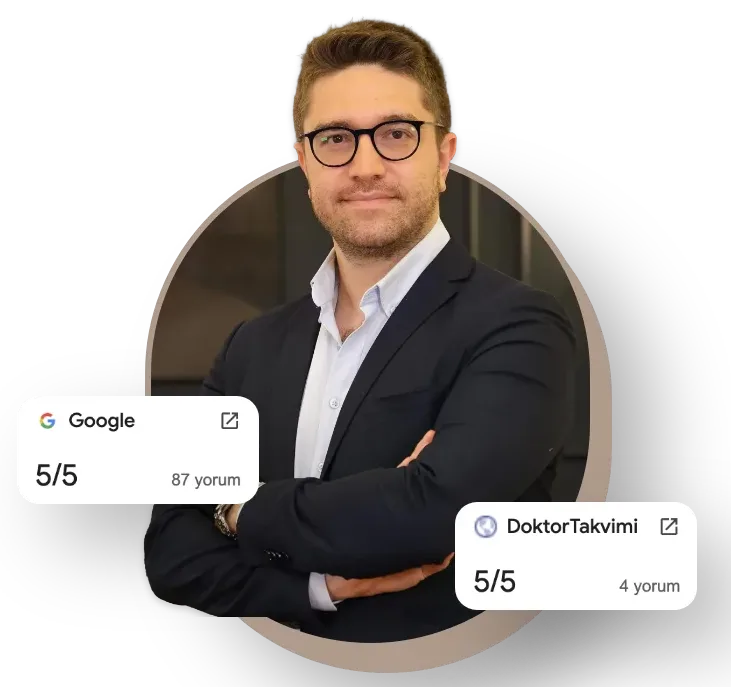
Op. Dr. Erman Ak is an internationally experienced specialist known for facial, breast, and body contouring surgeries in the field of aesthetic surgery. With his natural result–oriented surgical philosophy, modern techniques, and artistic vision, he is among the leading names in aesthetic surgery in Türkiye. A graduate of Hacettepe University Faculty of Medicine, Dr. Ak completed his residency at the Istanbul University Çapa Faculty of Medicine, Department of Plastic, Reconstructive and Aesthetic Surgery.
During his training, he received advanced microsurgery education from Prof. Dr. Fu Chan Wei at the Taiwan Chang Gung Memorial Hospital and was awarded the European Aesthetic Plastic Surgery Qualification by the European Board of Plastic Surgery (EBOPRAS). He also conducted advanced studies on facial and breast aesthetics as an ISAPS fellow at the Villa Bella Clinic (Italy) with Prof. Dr. Giovanni and Chiara Botti.
Op. Dr. Erman Ak approaches aesthetic surgery as a personalized art, tailoring each patient’s treatment according to facial proportions, skin structure, and natural aesthetic harmony. His expertise includes deep-plane face and neck lift, lip lift, buccal fat removal (bichectomy), breast augmentation and lifting, abdominoplasty, liposuction, BBL, and mommy makeover. He currently provides safe, natural, and holistic aesthetic treatments using modern techniques in his private clinic in Istanbul.