Türkçe
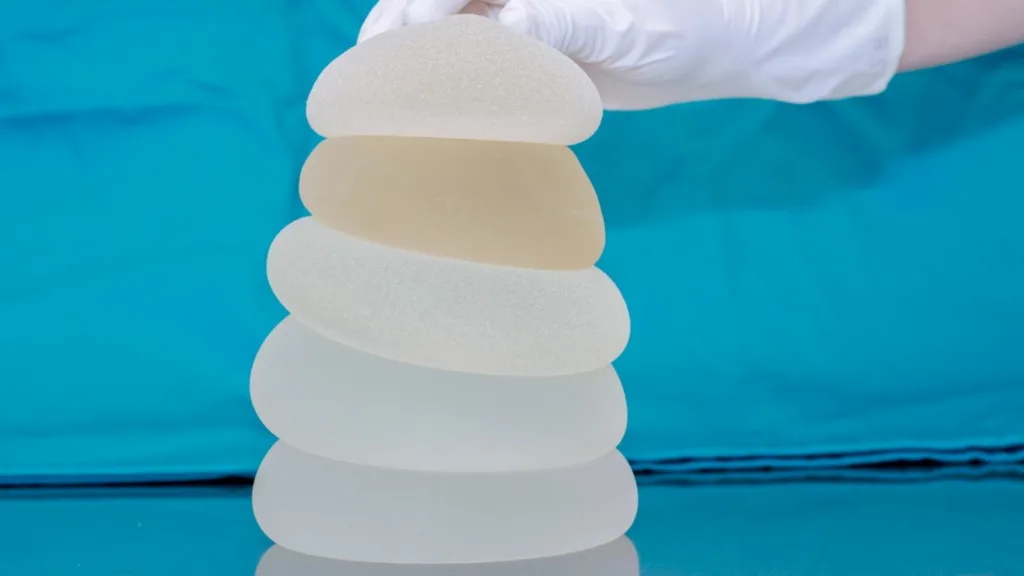
The question that most confuses the patients knocking on my door for breast augmentation surgery is this: “Doctor, would a teardrop or a round implant be better?” This question is not just an aesthetic preference; it is almost like a long-term marriage contract you will make with your body. Because the implant you choose will live with you for years; it will be there with every change of clothes and every glance in the mirror.
Silicone implants, much like shoe models, are basically divided into two main categories: teardrop (anatomical) and round. Both are made of the same material (silicone gel), both are FDA-approved, but the differences between them are as clear as the difference between a sneaker and a high heel. Let’s examine these differences from a surgeon’s perspective, but in simple language.
Teardrop (Anatomical) Silicone Implants: The Imitators of Nature
I can best describe teardrop implants with this analogy: Imagine a drop of water falling into your hand and elongating downward due to gravity. Teardrop implants have exactly this shape — thinner and more sloped at the top, fuller and rounder at the bottom.
The logic behind this design is to imitate natural breast anatomy. When you look at a real breast (of course, through the eyes of a plastic surgeon), you see that the upper part is less full, while the lower part is more voluminous due to the effect of gravity. Teardrop implants are designed to preserve this natural slope.
The surface of these implants is generally textured, much like sandpaper (though, of course, far more delicate). This textured surface almost “grips” the pocket where the implant is placed and prevents it from rotating. This is a critical point because when a teardrop-shaped implant rotates, it creates an asymmetric and unnatural appearance — like wearing a shoe backwards.
In the operating room, the patients for whom I most often prefer teardrop implants are those with little breast tissue, a prominent rib cage, or women who say, “Doctor, I don’t want anyone to understand that I’ve had surgery; I just want natural fullness.”
Round Silicone Implants: Classic and Forgiving
Round implants, as the name suggests, are perfectly circular — they look the same from every angle, like an orange slice. This symmetrical structure provides equal fullness to both the upper and lower parts of the breast. They are an ideal choice especially for patients who say, “Doctor, I want noticeable fullness in my cleavage.”
Round implants are available with both smooth and textured surfaces. Smooth ones can move freely within the surgical pocket, like water in a waterbed. This movement allows the implant’s shape to change naturally depending on body position. When lying down, the implant spreads to the sides (like real breast tissue); when standing, it settles downward under the effect of gravity.
In the operating room, the type of implant I use most often is round. There are two main reasons for this: First, from a surgical technique standpoint, they are more forgiving — just as you don’t have to think about the corners when placing a round table, you don’t have to calculate the angle at which the implant sits. Second, there is no risk of rotation — if you rotate a ball, it still looks like a ball, doesn’t it?
The Differences Between the Two Types of Implants: From the Surgeon’s Perspective
Understanding the differences between teardrop and round implants is essential for making an informed choice. These differences are not limited to shape; just as different car models differ not only in appearance but also in use.
In terms of shape, teardrop implants imitate the natural breast curve, while round implants provide equal fullness in all directions. This difference is more noticeable especially in thin patients — just as bones may show through a thin dress, the shape of the implant can be more clearly distinguished under thin skin.
In terms of surface characteristics, teardrop implants are generally textured (to prevent rotation), while round implants offer both textured and smooth options. This may affect the long-term risk of capsular contracture (the formation of hard tissue around the implant).
In terms of surgical placement, teardrop implants must be positioned at exactly the right angle, almost like a delicate work of art. A shift of even one millimeter to the right or left may lead to an asymmetric appearance. With round implants, this sensitivity is less — just as you don’t worry about aligning the edges when placing a round plate on a table.
Physical and Technical Features: The Anatomy of Implants
- Shape and Structural Differences: The Transformation of Mathematics into Aesthetics
The most fundamental difference between teardrop and round implants lies in their geometric structure. Think of teardrop implants like a slice of cake — there is a gradual increase in volume from top to bottom. The upper part makes up approximately 30–35% of the total volume, while the lower part constitutes 65–70%. This ratio imitates the distribution of natural breast tissue.
Imagine round implants as an orange slice — equidistant and equally full in every direction from the center point. Every point of the implant has the same volume. This is especially preferred by my patients who say, “Doctor, I want noticeable fullness in my cleavage.”
- Surface Characteristics: A Microscopic World
Think of the implant surface like terrain. When viewed under a microscope, textured surfaces resemble rugged land — full of small hills and valleys. This structure enables a stronger bond between the implant and surrounding tissues, like Velcro sticking to fabric.
In teardrop implants, this textured surface is vital for reducing the risk of rotation. It is a situation I frequently encounter during surgery: the textured surface fuses with surrounding tissues and keeps the implant fixed. This feature is indispensable for teardrop implants because if the implant rotates, it can lead to an aesthetic disaster — like wearing shoes backwards.
In round implants, both textured and smooth surface options are available. Smooth ones can move freely within the surgical pocket — like water in a waterbed. This mobility imitates natural breast movement and is ideal for patients who say, “Doctor, I want it to feel natural when touched.”
- Projection and Profile: The Art of Prominence
Both implant types come with different projection (forward protrusion) options — much like shoes come in different heel heights. Low profile, moderate profile, high profile, and extra-high profile options are available. However, the meaning of these profiles differs between teardrop and round implants.
During preoperative consultations, I explain it to my patients like this: In teardrop implants, projection is especially prominent in the lower pole (the lower part of the breast) — like the wider bottom of a drop of water. This creates a natural breast silhouette. In round implants, projection is distributed equally across the entire surface of the implant — like a balloon inflating evenly everywhere.
- Gel Density: From Pudding to Jelly
The gel used in modern silicone implants is highly cohesive (sticky). I explain it to patients like this: “If you cut a jelly dessert, the jelly does not scatter; it stays where it is cut. The gel inside the implant behaves the same way.” This feature prevents the gel from spreading into the body even if the implant ruptures.
Teardrop implants generally use a denser, form-stable gel — almost like firm jelly. This density is necessary to preserve the teardrop shape. In round implants, gel density may vary. Some contain softer gel (like pudding consistency), while others contain gel as dense as that in teardrop implants.
Gel density directly affects how the implant feels when touched. One of the most common questions my patients ask after surgery is: “Doctor, how will it feel when touched?” Implants with softer gel feel more natural, while firmer ones provide more pronounced fullness.
- Size and Volume: A Mathematical Equation
Calculating implant size is like solving a mathematical problem. In teardrop implants, size is evaluated in three dimensions: width, height, and projection. The harmony of these three dimensions is critical for a natural appearance — just as a dress must fit in length, width, and cut.
In round implants, the main measurements are diameter and projection. When planning surgery, I consider this fact: When comparing teardrop and round implants of the same volume (for example, 300cc), the round implant provides more fullness in the upper pole, while the teardrop implant creates more volume in the lower pole.
- Surgical Pocket Preparation: The Art of Nesting a Bird
The surgical pocket prepared for teardrop implants must perfectly match the implant’s shape, like the space where a puzzle piece will be placed. It is one of the most critical stages during surgery: If the pocket is too wide, the implant may rotate (like a loose shoe turning on the foot); if it is too narrow, the implant may deform. This delicate balance requires surgical experience.
Pocket preparation for round implants is relatively more flexible — like not worrying too much about the shape of a room when placing a round table. Thanks to the implant’s symmetrical structure, small differences in pocket size do not affect the aesthetic result. This may shorten surgical time and reduce the risk of complications.
- Long-Term Stability: The Test of Time
Both types of implants are designed to be long-lasting — like a quality household item that endures for many years. However, in my clinical experience, I have observed one fact: the form-stable gel and textured surface of teardrop implants may increase the risk of hardening (capsular contracture) over time. In round implants, especially smooth ones, this risk is lower.
Regarding implant lifespan, I always tell my patients: “The determining factor is not so much the type of implant, but the surgical technique, your body structure, and your postoperative care.” Under appropriate conditions, both implant types can last 10–20 years or longer — just as the lifespan of a car depends more on how it is used than on its brand.
Aesthetic Results: What the Eye Sees, What the Heart Feels
- Natural Appearance and Breast Anatomy: The Imitation of Nature
Teardrop silicone implants are the closest imitators of natural breast anatomy — like a master painter transferring nature onto canvas. The gradual thinning at the top and fullness at the bottom create a water-drop silhouette, especially when standing. Most of my patients say during postoperative follow-ups: “Doctor, no one can tell I’ve had surgery.”
Round implants provide equal fullness to both the upper and lower parts of the breast — like inflating a balloon evenly in all directions. This creates noticeable fullness, especially in the cleavage area. While some of my patients thank me for this “push-up effect without a push-up bra,” others may say, “I wish it looked a bit more natural.”
- Appearance According to Body Type: Every Body Tells a Story
In women with a slim and athletic body type, teardrop implants generally provide more natural results. During preoperative consultations, I often observe that in this body type, the rib cage is prominent, and the upper pole fullness of round implants may look artificial — like wearing a thick jacket over a thin dress. The gradual transition of teardrop implants softens this prominence.
In women with a fuller body type or sufficient existing breast tissue, round implants can also produce natural results. Because the existing breast tissue covers the upper part of the implant like a quilt and provides a natural transition.
- Movement and Dynamic Appearance: Life Is Not Static
Round implants, especially smooth ones, change shape according to body movement — like water shifting in a waterbed when you move. When lying down, they spread to the sides; when standing, they settle downward. This dynamic movement imitates natural breast motion.
A situation I frequently observe in postoperative follow-ups: Teardrop implants maintain their fixed form. No matter what position you are in, the teardrop shape does not change — like a frozen drop of water. For some patients, this may be an advantage (consistent appearance), while for others, a disadvantage (less natural movement).
- Appearance with Clothing: Harmony with Your Wardrobe
Teardrop implants provide a natural silhouette, especially in tight and form-fitting clothes. The natural slope in the upper part does not create a noticeable implant impression under clothing — like a dress that fits perfectly. This feature is important for patients who say, “Doctor, I don’t want anyone at work to notice,” or who want a natural look in sportswear.
Round implants provide a fuller look, especially in low-cut clothing — like having a built-in push-up bra. Upper pole fullness creates noticeable volume in deep V-neck dresses or swimsuits/bikinis. In my clinical experience, this look may be exactly the aesthetic that patients who say, “Doctor, I want a bit of a Hollywood style,” are seeking.
Factors to Consider When Choosing an Implant: Your Personal Journey
- Body Structure and Anatomical Features: The Frame Nature Gave You
The first factor to evaluate when choosing an implant is the patient’s existing body structure. During preoperative consultations, I always emphasize: “Your rib cage width, breast base diameter, skin elasticity, and the amount of existing breast tissue determine which implant is more suitable for you — just as a dress must be chosen according to your body type.”
In slim and athletic women, the rib cage bones may be prominent — like thin fabric stretched over a frame. In this case, the gradual thinning of the upper part of teardrop implants provides a more natural transition. In women with a wide rib cage, round implants may be more suitable to provide sufficient fullness — like needing a larger painting to fill a wide wall.
The amount of existing breast tissue is also a critical factor. In my clinical practice, I often observe that in women with sufficient breast tissue, round implants can look natural because the existing tissue camouflages the implant. In women with very little breast tissue, teardrop implants may reduce the palpability of implant edges — like how a sharp-edged object under a thin cover is more noticeable than one with rounded edges.
- Lifestyle and Activity Level: Your Daily Life Affects Your Implant
For women who are actively engaged in sports, implant choice carries special importance. I always ask my patients: “Which sports do you do, and how often?” For those who perform intense upper body exercises and frequently use their chest muscles, round implants may be more suitable. Because muscle movements may affect the position of a teardrop implant — like books on a shelf shifting every time the shelf is shaken.
Those who practice flexibility-requiring sports such as yoga, pilates, or gymnastics may benefit from the mobility of round implants. The fixed form of teardrop implants may cause discomfort in some positions — like trying to bend while wearing a rigid corset.
Women who frequently wear formal clothing in professional life may prefer the more conservative look of teardrop implants — like how a classic suit is appropriate in every setting. Those who desire a more pronounced cleavage appearance in social life may consider round implants — like how a party dress is more eye-catching.
- Aesthetic Expectations and Preferences: Beauty Is a Relative Concept
Every woman’s understanding of beauty is different. This is one of the topics I emphasize most during preoperative consultations. While some of my patients want a completely natural and unnoticeable augmentation, others prefer a more pronounced and fuller appearance. This personal preference is the determining factor in implant selection — just as some women prefer natural makeup, while others prefer more striking makeup.
Those who want a “natural” appearance generally lean toward teardrop implants. However, I always remind my patients: The concept of “natural” is subjective. Round implants selected in a size appropriate for the body type can also look natural — like a garment chosen in the correct size.
For those who want cleavage fullness and a “push-up” effect, round implants are more suitable. Especially women who wear swimsuits and bikinis may prefer upper pole fullness — like constantly feeling the effect created by a push-up bra.
- Budget Consideration: The Cost Factor
Teardrop implants are generally more expensive than round implants — like a custom-made dress being more expensive than a ready-made one. This price difference arises from production costs and a more complex design. In addition, since teardrop implant surgery takes longer, the surgical fee may also be higher.
I always advise my patients to consider long-term costs as well. Due to the risk of rotation with teardrop implants, revision surgery may be required. This means additional cost — like the higher maintenance expenses of a special car. Since this risk does not exist with round implants, they may be more economical in the long run.
- Surgeon’s Experience and Recommendations: Expert Opinion Matters
The surgeon’s experience is critical in implant selection. Placing teardrop implants requires more technical skill and experience — like repairing a complex watch requiring more expertise than fixing a simple one. If your surgeon does not have sufficient experience with teardrop implants, round implants may be a safer choice.
I always tell my colleagues and patients: The surgeon’s recommendations should be based on objective evaluations. A good surgeon assesses the patient’s anatomy, lifestyle, and expectations and provides unbiased recommendations — like a good tailor suggesting fabric and style according to your body type. Surgeons who insistently recommend only one type of implant should be approached with caution.
- Future Plans and Age Factor: Time Changes Everything
Women who have implants at a young age should consider future pregnancy and breastfeeding plans. I always explain to my patients: Neither implant type prevents pregnancy or breastfeeding, but these processes may affect breast shape — like a balloon not fully retaining its original form after being inflated and deflated.
The aging process should also be considered. Over time, breast tissue thins and sags — it is an inevitable rule of nature. The fixed form of teardrop implants may become more noticeable during aging — like a frame becoming more visible as the fabric over it thins. Round implants may better adapt to changes in breast tissue — like a flexible material adapting more easily to shape changes.
- Risk Tolerance: Everyone Perceives Risk Differently
Every surgical procedure carries risk. However, some women are willing to take more risk for aesthetic results. During preoperative consultations, I always ask: “What is your priority? The most natural appearance possible, or the lowest risk of complications?” The risk of rotation with teardrop implants may be discouraging for women who do not want to take risks — like a complex mechanism having a higher chance of malfunction.
The more predictable results of round implants provide reassurance for women with low risk tolerance — like a simple device functioning more reliably. However, the possibility that upper pole fullness may not look natural should also be considered.
A Personalized Decision
There is no single correct answer to the question of teardrop or round silicone implants — just as there is no single answer to the question, “Which is the best car?” Both types of implants have advantages and disadvantages. The right choice depends on the patient’s individual characteristics, lifestyle, and aesthetic expectations.
Teardrop implants may be an excellent choice for those seeking a natural appearance and working with a surgeon who has sufficient surgical experience. Their anatomical form and gradual fullness provide natural results, especially in slim body types — like a custom-tailored dress fitting the body perfectly.
Round implants stand out with their versatility, predictable results, and lower complication risk. They may be ideal for those who desire cleavage fullness and have an active lifestyle — like a multi-purpose outfit that can be comfortably worn in different settings.
I always tell my patients: The most important point is to make this decision together with an experienced plastic surgeon. A detailed examination, 3D simulations, and sample photographs can help in the decision-making process. Remember that breast aesthetics is not only about implant selection. Surgical technique, implant size, and placement plan also affect the result — just as a dish is shaped not only by its ingredients but also by the cooking technique.
Whichever implant you choose, having realistic expectations is important. No implant is perfect, and each has its own unique characteristics. The goal is to find the one that best suits your body type, lifestyle, and aesthetic goals — like choosing the shoes that fit you best.
In light of this information, determine your own priorities and establish open communication with your surgeon. With proper information and careful planning, you can achieve results you will be satisfied with. Because the best implant is the one that best suits your needs and expectations.
Op. Dr. Erman Ak is an internationally experienced specialist known for facial, breast, and body contouring surgeries in the field of aesthetic surgery. With his natural result–oriented surgical philosophy, modern techniques, and artistic vision, he is among the leading names in aesthetic surgery in Türkiye. A graduate of Hacettepe University Faculty of Medicine, Dr. Ak completed his residency at the Istanbul University Çapa Faculty of Medicine, Department of Plastic, Reconstructive and Aesthetic Surgery.
During his training, he received advanced microsurgery education from Prof. Dr. Fu Chan Wei at the Taiwan Chang Gung Memorial Hospital and was awarded the European Aesthetic Plastic Surgery Qualification by the European Board of Plastic Surgery (EBOPRAS). He also conducted advanced studies on facial and breast aesthetics as an ISAPS fellow at the Villa Bella Clinic (Italy) with Prof. Dr. Giovanni and Chiara Botti.
Op. Dr. Erman Ak approaches aesthetic surgery as a personalized art, tailoring each patient’s treatment according to facial proportions, skin structure, and natural aesthetic harmony. His expertise includes deep-plane face and neck lift, lip lift, buccal fat removal (bichectomy), breast augmentation and lifting, abdominoplasty, liposuction, BBL, and mommy makeover. He currently provides safe, natural, and holistic aesthetic treatments using modern techniques in his private clinic in Istanbul.