Deutsch
 Türkçe
 Nederlands
 Français
 Svenska
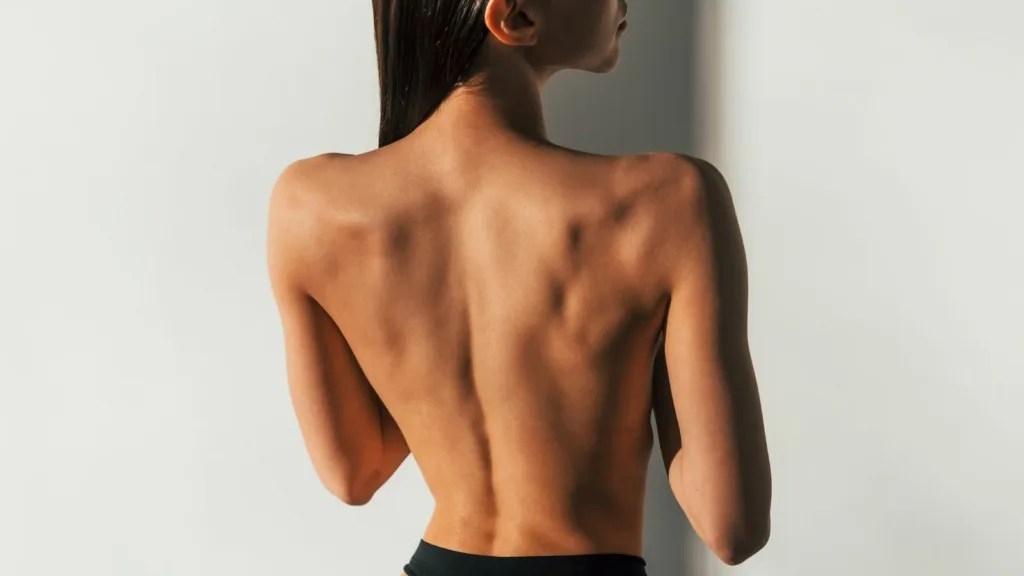
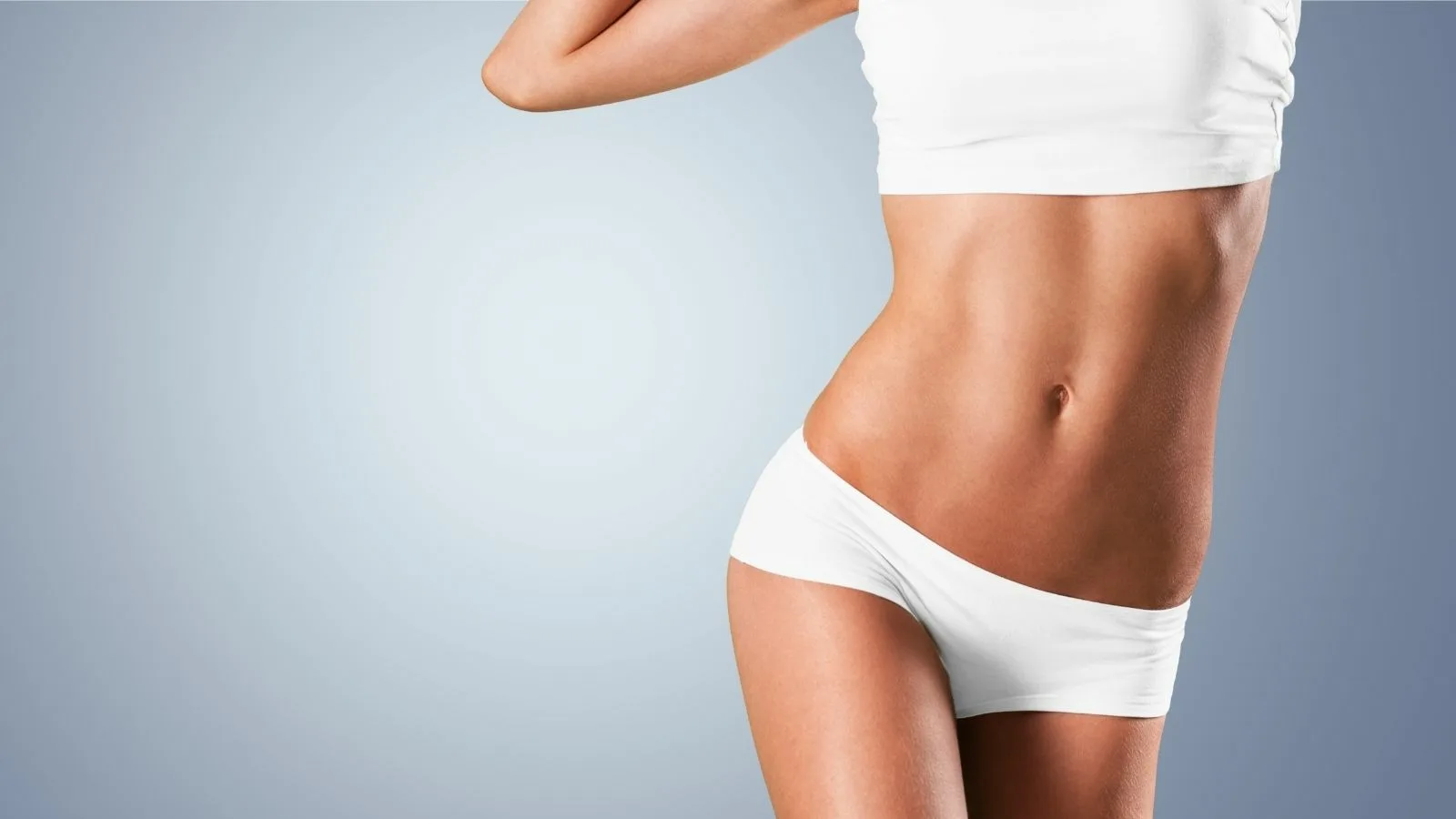
The trapezoid body type is a balanced and athletic body structure in which shoulder width is greater than hip width, and the waist circumference is moderately defined. While the upper body appears strong, proportional balance with the lower body is maintained, and the silhouette shows a controlled narrowing from top to bottom.
Characteristics of the trapezoid body type are defined by a broad shoulder line, volume in the chest area, and the absence of excessive narrowing at the waist. Weight gain is generally distributed evenly throughout the body; muscle mass is more prominent in the upper body, and posture plays a role in shaping the overall body form.
The question of how to identify the trapezoid body type is evaluated through circumference measurements. Having shoulder circumference wider than hip circumference, a waist circumference positioned proportionally between these two measurements, and a moderate waist-to-hip ratio are distinguishing criteria.
Fat and muscle distribution in the trapezoid body type is related to genetic structure and level of physical activity. Fat tissue generally accumulates in a limited manner in the central region, while muscle development is dominant in the upper body; this may cause metabolic risks to vary depending on lifestyle.
| Things You Should Know | Information |
| Definition of the trapezoid body type | The trapezoid body type is a body shape in which the shoulders are wider than the hips and the upper body is dominant compared to the lower body. The torso structure resembles an inverted triangle; however, shoulder transitions are softer. |
| Distinct physical characteristics | Broad and defined shoulders, narrow hips, minimal waist curvature, and a dominant upper body appearance. |
| How it is identified | If shoulder circumference is significantly larger than hip circumference in measurements taken with a tape measure (generally a 5–10% difference or more), it may indicate a trapezoid body type. In the mirror, the upper body appears stronger and wider. |
| Body measurement ratio | Shoulder circumference > Hip circumference. Waist circumference may be at a moderate level. |
| Common gender | More commonly seen in men. It can also be seen in women with an athletic build. |
| Advantages | Provides a sporty, strong upper body appearance. It is considered close to the ideal body shape, especially in men. In women, balance can be achieved with appropriate clothing and exercise. |
| Points to pay attention to | To balance body proportions, efforts should focus on strengthening the lower body and emphasizing waist curvature. Otherwise, the body may appear rigid and masculine. |
| Suitable exercise types | Exercises that develop hip and leg muscles (step-up, lunge, leg press) are recommended, along with waist-slimming core workouts for women. In men, balanced upper-lower body training should be applied. |
| Nutritional recommendations | A balanced, protein-focused diet appropriate for body composition is recommended. Body fat percentage should be kept under control. |
| Clothing recommendations | For women, flared skirts and patterned or pocketed trousers that emphasize the lower body are recommended. For men, straight-cut garments suitable for body proportions should be preferred. Exaggerated details on the upper body should be avoided. |
What Does the Trapezoid Body Type Represent?
The trapezoid form is a concept adapted to human anatomy based on a geometric definition and occupies a central place in modern aesthetic perception. You have probably heard of the “inverted triangle” body type; this is a structure commonly seen in professional swimmers or bodybuilders, where the shoulders are excessively wide, the waist is very narrow, and the lines are quite sharp and rigid. The trapezoid structure is a much more natural, fluid, and aesthetically sustainable version of this harsh and masculine transition.
In this special structure, the shoulders are noticeably wider than the hips, but this excess does not create a striking disproportion or a “boxy” appearance. On the contrary, the lines descending from the upper torso toward the waist show a balanced narrowing reminiscent of a trapezoid shape. This silhouette creates a perception of health, dynamism, and youth in both women and men. However, the most critical key point of this structure is the delicate slope between the shoulder heads and the base of the neck. If this slope becomes too steep, the neck appears shortened and the person looks more compressed than they actually are; if it flattens too much, the shoulders look droopy and lacking energy. The perfect balance we aim to achieve through aesthetic interventions lies precisely between these two extremes.
Why Is the Trapezius Muscle So Important for This Appearance?
The muscle group that gives this body type its name and extends across the most superficial layer of the back like a massive cloak is the “Trapezius” muscle. This muscle starts at the occipital bone just behind the skull, descends along the cervical vertebrae, expands toward the shoulders, and extends to the middle of the back. It has a broad, flat, and triangular-like structure. From an aesthetic standpoint, the part that interests us and our patients most is the region we call the “upper fibers” of the muscle, which forms the critical bridge between the neck and the shoulder head.
The upper trapezius muscle can be considered the main architect of the neck silhouette. The volume and tension of this muscle are the most important factors that determine whether the neck appears long or short. If this muscle group is genetically very developed or later undergoes hypertrophy and swelling due to various reasons (such as stress, improper exercise techniques, or constant forward bending), the shoulders rise upward. This creates a “no-neck” appearance and can make the person look heavier, older, or unnecessarily bulky. The middle and lower trapezius fibers are more responsible for posture. They prevent the shoulders from rolling forward and help keep the chest open and the back upright. Therefore, an aesthetic trapezoid form emerges not only from muscle size but from the harmonious and balanced functioning of all three sections together.
How Can You Identify the Trapezoid Body Type in Yourself?
To analyze your own body structure and understand how close you are to a trapezoid form, you do not always need complex medical devices or X-rays. A simple mirror test, careful observation, and the signals your body gives are often sufficient. When you stand upright in front of a full-length mirror, there are some basic points you should focus on:
These points are:
- Shoulder width
- Waist curve
- Neck length
- Visibility of the collarbone
- Arm resting angle
- Back width
In an ideal trapezoid structure, you should clearly notice that your shoulder width is visually greater than your hip or waist width. However, this width should not be rigid and angular like a “T” shape; instead, it should form a smooth, gentle curve flowing from the neck to the shoulders. When you let your arms hang freely at your sides, the space formed between your torso and arms should be symmetrical and balanced.
The appearance of the collarbone (clavicle) is also a very important indicator. In a trapezoid structure, the collarbones are usually visible and form an elegant line, but they are not covered by excessive muscle mass or thick fat tissue. If, when you look in the mirror, your neck appears sunken into your shoulders, the distance between your earlobes and shoulder heads is very short, or your shoulders appear too close to your ears, this may indicate that the trapezoid form has deteriorated. Another practical criterion is head posture; in the ideal form, while the chin is parallel to the ground, the neck should appear like a long and elegant column when viewed from both sides.
Why Does the Shoulder and Neck Area Become Thick and Look Coarse?
One of the most common complaints patients present with in clinical practice is thickening of the neck area, loss of aesthetic form, and shoulders acquiring a coarse, masculine appearance. The underlying mechanism of this condition is usually not due to a single cause; rather, it is a combination of muscle growth (hypertrophy), fat accumulation, and lifestyle habits.
The first and most common factor, muscle growth, is closely related to modern living conditions. Chronic stress, intense work tempo, traffic, and future anxiety increase cortisol levels in the body. When the body is under stress, it has an evolutionary reflex to shrug the shoulders upward as a protective response. This movement is unconsciously repeated hundreds of times throughout the day. Over the years, these micro-contractions cause the muscles to develop and gain volume, as if you were lifting weights every day at the gym. The result is constantly elevated shoulders, a shortened neck that appears sunken, and a hardened upper torso line.
Factors that cause thickening include:
- Chronic stress
- Postural disorders
- Incorrect exercises
- Carrying heavy bags
- Genetic predisposition
- Desk-based work
- Hormonal changes
- Weight gain
The second important factor is fat tissue distribution. Especially in individuals with genetic predisposition or with weight gain, stubborn fat pads begin to form at the back of the neck, right at the nape. This condition, commonly known as a “neck hump” or “Buffalo Hump,” severely disrupts the person’s profile appearance. The neck appears more forward-leaning than it actually is, and an unsightly, hump-like protrusion forms in the upper back. This is not only an aesthetic issue but also a biomechanical problem that places extra load on the cervical vertebrae and can trigger headaches.
Can the Desired Trapezoid Form Be Achieved with Barbie Botox (TrapTox)?
In recent years, the procedure popularized on social media as “Barbie Botox,” which we define in medical literature as trapezius botox or “TrapTox,” is the most effective non-surgical method we use to slim thickened shoulder muscles and achieve the desired elegant trapezoid form. The reason for this popular naming is the long, slender neck and upright shoulder line that emerge after the procedure, resembling the idealized neck-shoulder transition seen in dolls.
The basic principle of this procedure is quite simple, but its application requires extensive anatomical knowledge. Our goal is to temporarily relax the upper trapezius muscle, which is overactive, constantly contracted, and therefore hypertrophied. Botulinum toxin (Botox, Dysport, etc.) blocks the muscle’s ability to receive the “contract” signal from nerve endings. A muscle that cannot contract relaxes and rests, and over time, like any unused muscle, begins to lose volume, meaning it undergoes atrophy. This reduction allows the peak point of the shoulder to descend.
The advantages of the procedure are:
- No surgical incision
- No recovery time required
- Minimal pain
- Short application time
- Reduction in neck pain
- A slimmer neck appearance
- Enhanced collarbone definition
The procedure is quite practical and can literally be described as a “lunch break procedure.” It takes approximately 10–15 minutes. Strategic injections are made with fine-tipped needles into the most voluminous and trigger points of the muscle. The effect is not seen immediately in the mirror; it takes 3–7 days for the toxin to settle into the muscle, but the main visual change—shoulder descent and neck elongation—becomes noticeable after the third week. Patients usually begin to hear compliments such as “Did you lose weight?”, “Did your neck get longer?”, or “Your posture has really changed” from those around them after the first month. This procedure not only provides aesthetic slimming but also significantly alleviates chronic neck and back pain caused by tension, offering physical relief.
Is Liposuction Effective for Localized Fat Accumulation and Neck Hump?
If the patient’s problem is not muscle enlargement but excess subcutaneous fat tissue, botox alone will not be a sufficient solution. Botox slims the muscle but cannot eliminate the fat layer over it. Particularly in the area we refer to as the “neck hump,” the fat tissue has a much different, more fibrous and firm structure compared to fat in other areas of the body (such as the abdomen or hips). For this reason, it is highly resistant to diet and exercise; no matter how much weight a person loses, the bulge in that area may remain. At this point, modern liposuction technologies come into play.
Because the skin on the back and neck is thick, we prefer advanced technologies with skin-tightening properties rather than classic liposuction in this area. VASER Liposuction (ultrasonic sound waves) or Laser Liposuction methods are the gold standard for this region. VASER technology liquefies (emulsifies) hardened and fibrous fat tissue using sound waves, allowing us to remove it without damaging surrounding tissues, vessels, or nerves. As a result, post-procedure bruising and swelling are significantly reduced.
The goals of liposuction are:
- Removal of the fat pad
- Correction of the neck profile
- Elimination of the hunched appearance
- Revealing the neck contour
- Improvement of back contour
Laser liposuction or systems using plasma energy (such as J-Plasma) create an “ironing” effect by heating the skin from the inside after fat removal. This stage is critical because we do not want the skin to sag like a bag after removing the underlying fat. The skin must adhere tightly to the new, slimmer neck and back contour. This surgical intervention usually provides a permanent solution in a single session, as the removed fat cells do not return.
Is Shoulder Reduction Possible in Individuals with a Wide Bone Structure?
Sometimes patients come to us complaining that no matter how much weight they lose or how much botox they receive, their shoulders still look very wide. If, during our examination, we determine that the cause of this width is not muscle hypertrophy or fat accumulation but purely skeletal structure—specifically the length of the collarbones (clavicles)—soft tissue interventions will be insufficient. At this point, a more rarely performed but highly specific procedure with dramatic results, “Shoulder Reduction Surgery” (Clavicle Shortening), may be considered.
This procedure belongs to a more advanced and technical area of aesthetic surgery. The basic principle involves surgically removing a specific segment of the collarbone, which is the main beam determining shoulder width, and then rejoining the bone to physically narrow the shoulder span. In this way, shoulder width can be reduced by a total of 4–6 cm on both sides, creating a visually dramatic difference. However, it should be remembered that this is a bone surgery; it requires the use of plates and screws, and the recovery process is much longer compared to botox or liposuction. Therefore, we consider this method only in special cases where all other options have been exhausted and wide shoulders cause significant psychological distress or body image disorder.
Are Ideal Trapezoid Aesthetic Ratios Different in Women and Men?
Although the concept of “beauty” is subjective, there are universal mathematical proportions in aesthetic surgery that the eye perceives as beautiful and balanced. However, when it comes to the trapezoid region, these ratios and targets differ significantly by gender. Although we have the same muscles and bones anatomically, the desired silhouette is different.
In men, a wider, more voluminous trapezius structure with visible muscle borders and a slight upward slope toward the neck represents a masculine, strong, and athletic stance. In male patients, our goal is usually not to completely eliminate the muscle but to reduce excessive bulk and achieve a fitter appearance.
In female aesthetics, expectations are quite different. The targeted “feminine silhouette” or “swan neck” effect involves a structure where the neck appears as long as possible, shoulder heads are rounded rather than sharp, and collarbones become delicately defined. Ideally, shoulder width should be balanced with hip width, but the upper torso should never appear “boxy.” The desired angle between the neck and shoulder is close to 90 degrees, meaning the shoulders are upright but positioned lower rather than sloped downward. When planning botox or liposuction, we calculate these angles millimetrically and strive to achieve the most suitable “golden ratio” based on the patient’s face shape, jaw structure, and neck length.
How Long-Lasting Are the Results of Trapezoid Region Procedures?
The most natural curiosity of our patients is how long these pleasing results will last. The duration and dynamics of permanence vary depending on the method applied. If the solution is “Barbie Botox,” the effect of the procedure lasts an average of 4 to 6 months, depending on the brand and dose of the toxin used and the individual’s metabolic rate. However, there is a very important “cumulative effect” that delights our patients:
This effect works as follows: With regular applications (for example, 3–4 consecutive sessions), the muscle becomes accustomed to “staying small,” and returning to its former massive volume takes much longer. In some patients, because muscle memory changes, the muscle never reaches its previous thickness again. Over time, application frequency may decrease, and a once-a-year maintenance dose may become sufficient.
In fat removal procedures performed with liposuction, the results are theoretically permanent for life. After adolescence, the number of fat cells in our body is fixed; when we surgically remove these cells, it is biologically very difficult for fat to accumulate again in the same density in that area. However, if the patient gains excessive weight after the procedure, the remaining small number of fat cells can increase in volume. Therefore, weight maintenance is important for preserving optimal results.
How Does Postural Disorder Affect the Trapezoid Appearance?
Absolutely and unequivocally, yes. Regardless of the aesthetic intervention performed—whether surgery or botox—posture is the cornerstone of this issue. Even if you undergo the most successful liposuction surgery or receive the most effective botox, if you continue to stand with rounded shoulders (kyphotic posture) and keep your head tilted forward, a large portion of your aesthetic gains will be overshadowed.
Especially today, the forward head position caused by constant phone or tablet use, known as “Tech-Neck,” is an aesthetic enemy. Poor posture forces the trapezius muscle to strengthen, thicken, and shorten again; it also disrupts the natural curvature of the spine, making the neck appear much shorter than it actually is. Therefore, as physicians, we provide holistic recommendations to our patients in addition to clinical procedures.
Our recommendations are:
- Regular posture exercises
- Strengthening back muscles
- Adjusting screen height
- Taking frequent breaks
- Stretching exercises
- Using ergonomic pillows
- Limiting phone usage
Frequently Asked Questions
How is the trapezoid body type identified?
The trapezoid body type is a balanced body structure in which the shoulders are slightly sloped and similar in width to the hips, and the waist indentation is moderately defined. The body narrows slightly from top to bottom, resembling a trapezoid shape.
What is the difference between the trapezoid body type and the hourglass type?
In the hourglass body type, the waistline is thinner and more pronounced. In the trapezoid type, the waist difference is less, but the upper and lower body are balanced. The hourglass type is more curvy, while the trapezoid type has smoother transitions.
Is the trapezoid body type more common in women or men?
It can be seen in both genders, but it is more common in men. In men, broad shoulders and a straight-descending body line create a trapezoid appearance. In women, this form is rarer.
How should people with a trapezoid body type dress?
Due to its proportional structure, many clothing models are suitable for this type. However, garments that emphasize the waist can create a more curvy appearance. Cuts that preserve the shoulder line and highlight the waist are ideal.
How can the trapezoid body type be shaped through exercise?
Exercises targeting the oblique abdominal muscles and strengthening the gluteal muscles are recommended to increase waist indentation. Weight training can be used to balance the upper and lower body.
How does weight gain distribute in the trapezoid body type?
Weight generally spreads evenly across the upper torso and abdominal area. The waist region may be affected quickly. With excessive weight gain, body contours may lose definition.
What are the advantages of the trapezoid body type?
Its proportional structure provides a sporty appearance. It offers flexibility in clothing selection. In women, it can create a strong posture, and in men, an athletic silhouette.
Is the trapezoid body type aesthetically ideal?
It is considered aesthetically pleasing by many due to its balanced structure. It may be ideal for those without a preference for pronounced curves. Waist and hip ratios can be enhanced aesthetically if desired.
How does the aging process affect the trapezoid body type?
With a slowing metabolism, fat may accumulate around the waist. Muscle loss flattens body contours. Regular exercise and healthy nutrition can slow these changes.
How can the trapezoid body type be transformed aesthetically?
Fat transfer or body contouring procedures can be applied to accentuate the waist indentation and enlarge the hips. In this way, a more curvy appearance can be achieved.
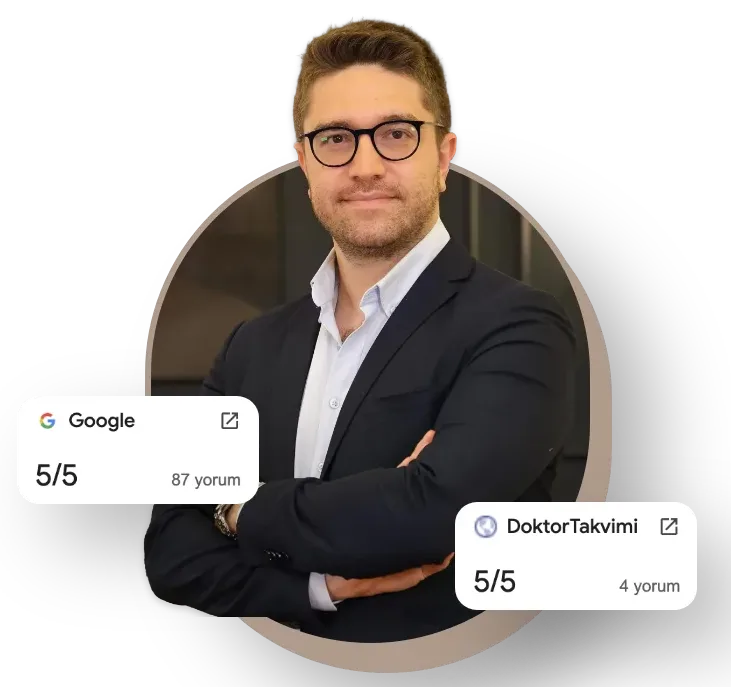
Op. Dr. Erman Ak is an internationally experienced specialist known for facial, breast, and body contouring surgeries in the field of aesthetic surgery. With his natural result–oriented surgical philosophy, modern techniques, and artistic vision, he is among the leading names in aesthetic surgery in Türkiye. A graduate of Hacettepe University Faculty of Medicine, Dr. Ak completed his residency at the Istanbul University Çapa Faculty of Medicine, Department of Plastic, Reconstructive and Aesthetic Surgery.
During his training, he received advanced microsurgery education from Prof. Dr. Fu Chan Wei at the Taiwan Chang Gung Memorial Hospital and was awarded the European Aesthetic Plastic Surgery Qualification by the European Board of Plastic Surgery (EBOPRAS). He also conducted advanced studies on facial and breast aesthetics as an ISAPS fellow at the Villa Bella Clinic (Italy) with Prof. Dr. Giovanni and Chiara Botti.
Op. Dr. Erman Ak approaches aesthetic surgery as a personalized art, tailoring each patient’s treatment according to facial proportions, skin structure, and natural aesthetic harmony. His expertise includes deep-plane face and neck lift, lip lift, buccal fat removal (bichectomy), breast augmentation and lifting, abdominoplasty, liposuction, BBL, and mommy makeover. He currently provides safe, natural, and holistic aesthetic treatments using modern techniques in his private clinic in Istanbul.