Türkçe
According to scientific evidence, breast implants do not cause cancer and do not produce systemic harm to the body. The implants used in modern medicine are FDA- and CE-approved materials that are fully compatible with human tissue. It has been definitively established through half a century of clinical data that these medical devices, used in tens of millions of women in aesthetic surgery practice, do not increase the risk of conventional breast cancer. High-tech implants preferred for breast augmentation or breast reconstruction procedures can be used safely without threatening health thanks to their tissue-friendly structure. Planning performed under the guidance of a plastic surgeon has proven that these implants do not interfere with routine cancer screening or vital bodily functions.
What Are Breast Implants Made Of and How Do They Adapt to the Body?
Silicone is actually obtained by processing silicon, an element found abundantly in nature, through specific chemical procedures. We already encounter this material in countless everyday products, from kitchen utensils and baby pacifiers to intraocular lenses and heart valves. However, when the subject is a medical product intended to remain permanently inside the human body, the standards become much more stringent. Medical-grade manufacturing processes ensure that the material is pure and durable enough to avoid causing any chemical harm to human tissues.
The biggest problem with older-generation implants was that they contained a liquid filling. If the shell became damaged, this liquid could spread into the surrounding tissues. However, the technology used in modern implants has completely eliminated this concern. Today, a highly specialized formulation called “cohesive gel” is used. To visualize this structure, imagine a gummy candy. When you cut a gummy candy in half, no liquid flows out; both halves retain their shape, integrity, and consistency. Modern cohesive gels work in exactly the same way. Even if the outer shell of the implant is intentionally cut, the gel inside does not leak into the surrounding tissues, disperse, or lose its form.
The body naturally develops a defense mechanism against any foreign material placed inside it. When an implant is inserted into the breast area, the immune system immediately responds by surrounding it with a very thin, transparent layer of tissue. This membrane, known medically as a “capsule,” is the body’s way of isolating the implant while allowing it to coexist peacefully with the surrounding tissues. Therefore, this is not a sign of disease but rather an entirely healthy and expected part of the natural healing process. Because medical-grade cohesive gels do not release chemicals that overstimulate the immune system, this capsule remains thin, allowing the body to coexist harmoniously with the implant throughout life.
Do Breast Implants Increase the Risk of Conventional Breast Cancer?
The most appropriate way to begin is by giving a clear and scientific answer to the question that keeps many women awake at night. No, breast implants do not increase the risk of conventional breast cancer in any way. This fact has been confirmed by some of the largest scientific studies ever conducted, involving millions of women worldwide who have been followed for decades.
Breast cancer develops through a complex interaction of many factors, including genetics, cellular mutations, age, family history, and hormonal changes. A medical implant placed in the breast does not alter the genetic structure of cells or trigger mutations capable of causing cancer. Research findings are remarkably clear. The incidence of breast cancer among women who have breast implants is mathematically identical to that of women who have never undergone breast surgery.
Furthermore, even if a very small cancerous lesion already exists in the breast but has not yet been detected, the presence of an implant does not accelerate its growth, multiplication, or spread throughout the body. In short, if your genetic makeup or environmental factors already place you at risk, that risk remains exactly the same whether or not you undergo implant surgery. The operation does not increase that risk by even a single percentage point.
How Is Breast Cancer Screening Performed in Women with Breast Implants?
In the past, there was a widespread belief that an implant placed inside the breast might prevent radiological devices from obtaining clear images or hide tumors behind it. Considering the imaging technologies available at that time, these concerns were partially justified. However, the current state of radiology has rendered this problem virtually obsolete.
Radiologists are now able to evaluate breast tissue containing implants with extremely high accuracy. During mammography, in particular, a highly effective technique known as the Eklund maneuver is used. In this method, the radiologist gently pushes the implant backward toward the chest wall while pulling the patient’s natural breast tissue forward. Only the natural breast tissue is positioned between the mammography plates. This keeps the implant outside the imaging field, allowing every millimeter of the breast tissue to be examined clearly.
In addition, if a suspicious finding is identified or a more detailed evaluation is required, Magnetic Resonance Imaging (MRI) is performed. MRI provides detailed three-dimensional images of the tissues in multiple layers, and the presence of an implant does not compromise the quality of MRI imaging.
What Are BIA-ALCL and SCC Associated with Breast Implants?
Although breast implants do not increase the risk of conventional breast cancer, there are two extremely rare conditions that have received attention in recent years and that patients should be aware of without unnecessary concern. These conditions do not arise within the breast tissue itself but rather in the thin capsule naturally formed around the implant.
The first condition is called BIA-ALCL (Breast Implant-Associated Anaplastic Large Cell Lymphoma). Although its name contains the word “lymphoma,” it is not breast cancer. Instead, it is a rare type of lymphoma arising from immune system cells. It generally develops in fluid accumulated around older-generation implants with heavily textured surfaces. Its occurrence is exceptionally rare, affecting only a very small number of women among tens of thousands. It usually presents seven to ten years after surgery with painless swelling caused by sudden fluid accumulation around one breast. Fortunately, when diagnosed early, treatment is straightforward. Complete removal of the implant and its surrounding capsule is generally sufficient, allowing the patient to recover fully without requiring chemotherapy or additional cancer treatment.
The second condition is SCC (Squamous Cell Carcinoma), which is even rarer than BIA-ALCL. It is believed to result from chronic inflammation that remains unnoticed for many years and eventually alters the cells within the capsule. Its symptoms include severe pain, swelling, and the sudden development of a firm mass years after implantation. To minimize the risk of these rare conditions, modern surgical techniques and implant surface technologies have been completely redesigned, with smooth or microtextured implants now becoming the standard.
Which Protocols Ensure Safety During Breast Implant Surgery?
The philosophy of modern aesthetic surgery is not to treat complications after they occur but to eliminate the conditions that may lead to complications while the patient is still in the operating room. To achieve this, internationally accepted protocols designed to minimize bacterial contamination and prevent capsular contracture are meticulously followed.
Some of the fundamental components of the globally recognized 14-Point Plan include:
- Intravenous antibiotic administration
- Preference for an inframammary incision
- Use of areola-protective barriers
- Bloodless surgical dissection
- Avoiding injury to the milk ducts
- Dual-plane placement technique
- Irrigation with a triple-antibiotic solution
- Use of no-touch insertion devices
- Minimizing exposure to air
- Changing surgical instruments and gloves
- Layered, watertight wound closure
Each of these steps has a strong scientific foundation. Antibiotics administered intravenously immediately before surgery prevent bacteria that naturally live on the skin from multiplying once they enter the tissues. The choice of incision site is also deliberate. Since milk ducts around the nipple naturally harbor bacteria, the incision is generally made in the much cleaner fold beneath the breast. If an incision around the nipple is unavoidable, protective barriers are used to prevent bacteria from entering the surgical field.
The surgeon’s gentle handling of the tissues is equally important. Rather than tearing tissues apart, they are carefully separated while bleeding is immediately controlled. Even the smallest blood clot or damaged tissue fragment left behind may provide an ideal environment for bacterial growth. Meticulous control of bleeding eliminates this risk entirely.
Once the implant pocket has been created, it is repeatedly irrigated with a special solution containing three different antibiotics. One of the most critical stages is the no-touch insertion technique. After the implant is removed from its sterile packaging, it never comes into direct contact with the surgeon’s gloves or the patient’s skin. Instead, it is placed inside a sterile funnel-like insertion device and gently delivered into the prepared pocket without touching the skin. This entire protocol forms an extensive safety system that prolongs the implant’s lifespan and protects patient health.
How Are Breast Implants Placed and How Is a Natural Appearance Achieved?
A successful aesthetic result cannot be achieved using a single standard approach. Every woman has unique shoulder width, chest anatomy, skin thickness, and breast tissue volume. Therefore, determining the placement of the implant requires individualized anatomical planning.
The primary surgical approaches include:
- Submuscular placement
- Subglandular placement
- Dual-plane placement
- Hybrid placement
With the submuscular technique, the implant is placed completely beneath the large chest muscle. This approach is particularly beneficial for very thin patients with minimal natural breast tissue. The thick muscle layer covers the implant like a blanket, preventing its edges from becoming visible and creating exceptionally soft, natural transitions.
In the subglandular technique, the implant is placed directly beneath the breast tissue but above the muscle. Since the muscle remains untouched, postoperative discomfort is generally minimal and recovery is faster. This technique is ideal for women who regularly participate in strength training because muscle contractions do not affect implant shape. However, it requires adequate natural breast tissue and skin thickness to achieve optimal cosmetic results.
Today, the dual-plane technique is considered the gold standard for creating the most natural silhouette. In this approach, the upper half of the implant is hidden beneath the muscle, preventing visible implant edges in the cleavage area. The lower half is positioned beneath the breast tissue, allowing the lower breast to develop the gentle, teardrop-like contour characteristic of a natural breast.
The hybrid technique represents one of the latest technological advances. Instead of relying solely on silicone implants, the patient’s own fat tissue harvested from areas such as the abdomen or thighs is enriched with regenerative cells and injected around the implant. This preserves implant volume while maximizing natural softness and improving contour. It is particularly effective in correcting breast asymmetry.
What Is Capsular Contracture After Breast Implant Surgery and How Can It Be Prevented?
As mentioned previously, the thin capsule naturally formed around an implant is both beneficial and necessary. However, in some cases, the body produces this capsule much more aggressively than normal. Instead of remaining thin, it becomes thick, firm, and begins to contract. This tightening may become so powerful that it compresses the implant from every direction, much like squeezing a balloon. This condition is known medically as capsular contracture.
The severity of capsular contracture is classified into:
- Grade One
- Grade Two
- Grade Three
- Grade Four
During the first two stages, there are usually no noticeable external changes, although slight firmness may be felt. In Grades Three and Four, however, the breast begins to develop visible deformity, asymmetry, and significant firmness. In advanced cases, persistent pain may seriously reduce quality of life.
Why does this occur? Extensive research has shown that the primary causes are microscopic bleeding during surgery and invisible bacteria introduced from the skin. The 14-Point Plan, meticulous bloodless surgical techniques, and modern no-touch implant insertion methods dramatically reduce bacterial contamination, decreasing the risk of capsular contracture to well below one percent.
Is There a Risk of Breast Implants Rupturing or Leaking?
For many years, myths have circulated claiming that implants may rupture because of airplane cabin pressure or leak during mountain climbing or deep-sea diving. However, the laws of physics and material science clearly refute these claims. Modern cohesive gels and their multilayered shells are extraordinarily durable. During laboratory testing, these implants are subjected to automobile tires, industrial compression machines, and enormous weights without rupturing. Consequently, it is virtually impossible for implants to rupture under the types of trauma encountered during normal daily life. Air travel and diving do not affect them.
Nevertheless, it should be remembered that no medical device lasts forever. After fifteen to twenty years inside the human body, where they are constantly exposed to movement, body temperature, and age-related tissue changes, the outer shell may gradually experience mechanical fatigue. Tiny microscopic tears may eventually develop. However, because the cohesive gel is not liquid, it does not leak even if the shell is damaged. Patients generally notice no pain or change in breast shape. This condition, known as silent rupture, is typically detected during routine imaging years later, and the implant can then be replaced through a relatively straightforward procedure.
Which Breast Implant Brands Are Most Widely Recognized?
Regardless of how perfectly the surgical technique is performed, the quality of the implant itself is one of the greatest guarantees of long-term health and aesthetic success. Manufacturers with extensive clinical experience and the most rigorous international approvals should be preferred.
Brands recognized worldwide for their reliability include:
- Mentor
- Motiva
- Polytech
- Natrelle
These manufacturers offer implants that have been used in millions of women and whose safety has been demonstrated through scientific research. Some companies have introduced tiny biocompatible microchips, smaller than a hazelnut, inside their implants. Years later, these chips can be scanned externally using specialized devices, providing digital information about the implant’s manufacturing date, serial number, and status without requiring radiological imaging. Other manufacturers have developed polyurethane-coated surfaces that further improve tissue integration while minimizing the risk of capsular contracture. The most appropriate implant brand is selected by the plastic surgeon according to the patient’s anatomy and aesthetic goals.
What Is Recovery Like After Breast Implant Surgery and When Can Daily Activities Be Resumed?
The belief that recovery after breast implant surgery is extremely painful and requires weeks of bed rest is no longer accurate. Thanks to modern anesthesia and tissue-preserving, bloodless surgical techniques, recovery has become remarkably fast.
The first forty-eight hours represent the body’s adjustment period. A sensation of fullness, mild tightness, and fatigue in the chest is entirely normal. However, these symptoms are generally well controlled with simple prescribed pain medication. Most patients are discharged the day after surgery while walking independently.
By the end of the first week, office workers and women whose jobs do not involve heavy physical labor can usually return to work and social activities. They should simply avoid lifting their arms excessively high or carrying heavy objects. By the end of the first month, postoperative support bras may be replaced with regular bras, and light walking and lower-body exercises may gradually be resumed.
By the third month, the tissues have softened completely, most of the swelling has resolved, and the implants settle into their intended soft, natural position under the influence of gravity. Between the sixth month and the end of the first year, the incision scars continue to fade until they become barely noticeable, and the final aesthetic result is achieved.
Can Women with Breast Implants Become Pregnant and Breastfeed?
One of the greatest concerns for young women is whether breast implants will affect their ability to become mothers. Fortunately, these procedures do not interfere with pregnancy, childbirth, or breastfeeding.
From an anatomical perspective, the milk-producing glands and the ducts carrying milk to the nipple are located closer to the surface. During modern surgical procedures, particularly with submuscular or dual-plane placement, these structures remain untouched. The implant is positioned in a completely separate compartment behind these functional tissues. Consequently, milk production is not impaired by the surgery. Furthermore, it is chemically impossible for silicone molecules to enter the milk ducts and contaminate breast milk. Even after breastfeeding has ended and the breast tissues return to their previous state, the implant continues to support breast shape and maintain its contour.
Which Routine Imaging Methods Are Recommended for Women with Breast Implants?
A successful operation does not mean that follow-up is complete. Lifelong monitoring is one of the most important principles of maintaining long-term health. Even in the absence of symptoms, routine examinations should be scheduled regularly.
The main imaging methods recommended according to international standards include:
- Ultrasonography
- Mammography
- Contrast-enhanced breast MRI
- Non-contrast implant MRI
Ultrasonography is an excellent first-line imaging method for younger women. It involves no radiation, is painless, and clearly demonstrates whether any unwanted fluid has accumulated around the implant. Beginning at the age of forty, women should also undergo routine mammography. Using specialized imaging techniques such as the Eklund maneuver, breast cancer screening can be safely performed.
The most reliable method for evaluating the integrity of the implant itself—including detecting microscopic fatigue or silent rupture of the multilayered shell—is MRI. The first routine MRI is generally recommended five to seven years after surgery, followed by repeat examinations every two to three years to confirm implant integrity.
Frequently Asked Questions
Are breast implants harmful, and can they cause long-term health problems?
Breast implants are generally considered safe when appropriate patient selection and proper surgical techniques are used. However, as with any medical implant, complications such as capsular contracture, rupture, or infection may occur, making regular follow-up important.
Do breast implants cause cancer or increase the risk of breast cancer?
Current scientific evidence does not indicate that breast implants directly cause breast cancer. However, because a very rare type of implant-associated lymphoma may occur, regular follow-up examinations are recommended.
Are breast implants harmful, and do they affect the immune system?
Although some individuals report various systemic symptoms after receiving implants, scientific research on this subject is still ongoing. Evaluation of such complaints may require collaboration between plastic surgeons and other relevant specialists.
Do breast implants cause cancer, and what is implant-associated lymphoma?
Breast Implant-Associated Anaplastic Large Cell Lymphoma (BIA-ALCL) is an extremely rare condition. It is different from breast cancer and usually develops in the tissues surrounding the implant. With early diagnosis, it can be successfully treated.
Are breast implants harmful, and what happens if an implant ruptures?
Ruptures of modern implants may not always produce symptoms. If silicone escapes beyond the implant shell, medical evaluation is required, and in some cases replacement or removal of the implant may be recommended.
Do breast implants cause cancer, and do they affect mammography results?
Breast implants may influence certain imaging techniques, but breast tissue can still be evaluated using specialized mammography techniques and additional imaging methods. Therefore, the radiology team should always be informed about the presence of implants.
Are breast implants harmful, and how often should they be checked?
Individuals with breast implants are advised to attend regular medical follow-up appointments. Clinical examinations and, when necessary, imaging methods such as ultrasound or MRI can provide information about implant condition.
Do breast implants cause cancer, and do they increase the risk in women with a family history of cancer?
Having a family history of breast cancer does not mean that implants cause cancer. However, regular screening programs and specialist follow-up become even more important in individuals who already have an elevated risk.
Are breast implants harmful, and do they affect pregnancy or breastfeeding?
Most women with breast implants can experience healthy pregnancies and breastfeed successfully. However, depending on the surgical technique used and implant placement, milk production or breastfeeding may be affected in certain situations.
What do specialists recommend regarding the question of whether breast implants cause cancer?
Specialists state that breast implants are not directly associated with breast cancer. Nevertheless, they recommend that women with implants continue regular medical follow-up, monitor any changes, and never neglect the recommended screening examinations.
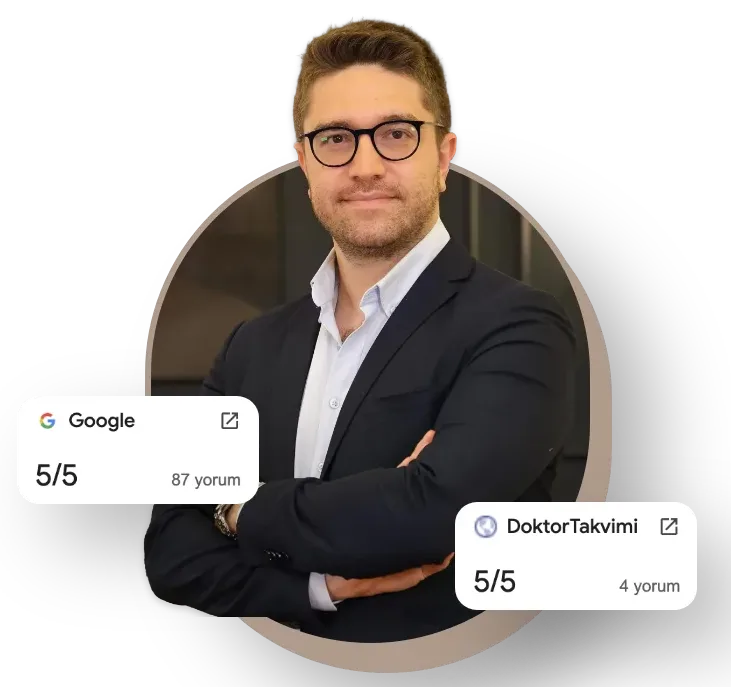
Op. Dr. Erman Ak is an internationally experienced specialist known for facial, breast, and body contouring surgeries in the field of aesthetic surgery. With his natural result–oriented surgical philosophy, modern techniques, and artistic vision, he is among the leading names in aesthetic surgery in Türkiye. A graduate of Hacettepe University Faculty of Medicine, Dr. Ak completed his residency at the Istanbul University Çapa Faculty of Medicine, Department of Plastic, Reconstructive and Aesthetic Surgery.
During his training, he received advanced microsurgery education from Prof. Dr. Fu Chan Wei at the Taiwan Chang Gung Memorial Hospital and was awarded the European Aesthetic Plastic Surgery Qualification by the European Board of Plastic Surgery (EBOPRAS). He also conducted advanced studies on facial and breast aesthetics as an ISAPS fellow at the Villa Bella Clinic (Italy) with Prof. Dr. Giovanni and Chiara Botti.
Op. Dr. Erman Ak approaches aesthetic surgery as a personalized art, tailoring each patient’s treatment according to facial proportions, skin structure, and natural aesthetic harmony. His expertise includes deep-plane face and neck lift, lip lift, buccal fat removal (bichectomy), breast augmentation and lifting, abdominoplasty, liposuction, BBL, and mommy makeover. He currently provides safe, natural, and holistic aesthetic treatments using modern techniques in his private clinic in Istanbul.