Türkçe
When reviews from people who have undergone tummy tuck surgery are examined, it is seen that the vast majority of patients are extremely satisfied with their new body contour and improved quality of life. These shared experiences demonstrate that the operation is more than a physical transformation and is also a process that renews self-confidence, while directly revealing that patience during the first few weeks of recovery is the most fundamental criterion for achieving the final aesthetic success. In particular, the results achieved after eliminating sagging in the abdominal area and tightening the muscles, when combined with proper expectation management, make this one of the most effective aesthetic procedures that causes people to say, “I’m glad I had it done.”
Why Is the Expression “Regret” Frequently Encountered in Reviews Written During the First Weeks After Surgery?
The parts that perhaps concern readers the most in diaries or forum posts written after tummy tuck surgery are the feelings shared during the first few days following the operation. Many people who are still at the very beginning of the process may experience an unexpected psychological collapse when they return home after undergoing surgery with great hope. Those reading these posts on a screen may encounter highly radical and pessimistic statements such as, “I made the biggest mistake of my life,” “I was definitely better before,” or “I wish I had never gone through this pain.” This situation is related to the sudden change in body perception and the completely natural response of the body following surgical trauma, namely surgical shock.
In real life, recovery does not happen within seconds as it appears in before-and-after photos on social media. The first week is the period when the body is most vulnerable and swollen. When the person looks in the mirror, instead of seeing the perfectly flat and smooth abdomen they imagined, they encounter a body covered with bandages, swollen, bruised, and resistant. Moreover, this appearance is accompanied by significant physical limitations.
The challenging factors include:
- Drainage tubes
- Compression garment
- Walking bent forward
- Getting out of bed with assistance
People who have been highly active throughout their lives, exercised regularly, or worked in physically demanding occupations find it especially difficult to psychologically accept suddenly becoming dependent on someone else’s help. Being unable to tie their own shoes or needing assistance while showering damages their sense of independence, and this is directly reflected in comments as anger or regret. However, the most important feature of this period is that it is completely temporary. As the body begins to heal, the bandages are removed, and the person starts walking upright, those dark clouds in the mind quickly disperse. People who enter this period prepared through accurate information experience the first-week crisis much more easily. In posts written by the same individuals a few months later, no trace of the initial regret remains, and it has been replaced by a great sense of celebration.
How Does the Progression of the Recovery Timeline Change Patients’ Reviews on Digital Platforms Over Time?
The body’s healing process does not progress in a straight line; it is a fluctuating journey with peaks and pauses of its own. When experience posts are examined chronologically, it is remarkable to observe how the words used, emotions felt, and outlook on life change fundamentally as weeks and months pass.
During the acute period covering the first week, posts are entirely centered around survival and basic needs. Questions such as “When will my drains be removed?”, “When will my back pain go away?”, and “Have I forgotten how to walk upright?” become the main topics on forums. At this stage, aesthetic concerns are completely set aside; the focus is solely on physical comfort. Since eliminating the effects of anesthesia and initiating tissue repair consume all available energy, the person constantly describes feeling tired and weak.
During the subacute period between the second and fourth weeks, the story changes direction. The person can now move independently, and the pain has largely decreased, but this time frustration and impatience take the stage.
The most commonly reported complaints during this phase include:
- Itching caused by the compression garment
- Tingling
- Numbness
- Asymmetrical swelling
People write that one side of the abdomen is more swollen than the other and that when they touch it, it feels as though they are touching thick cardboard rather than their own skin. The fact that the body contours have not yet fully settled becomes a major test of patience. However, from the first month onward and through the third month, the long-awaited transformation begins. The tone of the posts suddenly becomes brighter. Most of the swelling has subsided, the tissues have begun to soften, and the abdomen has started to take its final shape. Comments now shift from complaints to celebratory messages such as, “Today I tried on an old pair of trousers and the waist was loose,” or “I can’t believe what I see when I look in the mirror.” During the maturation phase extending from the sixth month to one year, memories of the difficult early days fade almost completely. The comments now consist of strong recommendations encouraging others who are considering surgery, such as, “It is absolutely worth it; have it done without hesitation.”
Why Does the Aesthetic Appearance of the Belly Button Play Such a Critical Role in Patient Satisfaction Reviews?
In this major operation in which the abdominal region is reshaped, one of the finest details determining the result is the belly button, which may appear to be only a small point from the outside. When detailed accounts of postoperative experiences are examined, it becomes clear that having a perfectly flat abdomen alone does not guarantee satisfaction. If the belly button does not look natural, even a tight and flawless abdominal surface may not be enough to satisfy the person.
The belly button is located at the center of the body and carries the signature of naturalness. On platforms where negative experiences are shared, complaints such as, “My abdomen looks amazing, but my belly button looks artificial,” “It is positioned too high,” “It is too wide and not deep enough,” or “There is a very obvious circular scar around it” are quite common. This aesthetic concern can be so profound that the person may avoid wearing a bikini at the beach or continue staying away from clothing that exposes the abdomen because of this single detail. It may be perceived as visible evidence constantly carried on the body that reveals a cosmetic procedure has been performed.
In accounts of successful outcomes, emphasis on the natural appearance of the belly button is striking. Expressions such as, “It looks as though it was never touched,” “It is exactly like my original belly button,” and “Its depth is just right” become major sources of self-confidence. To achieve this natural appearance, the sutures must be placed beneath the skin so that they are not externally visible, and an appropriate indentation must be created. Correct anatomical positioning of this small area and avoiding an artificial appearance are among the most fundamental elements directly affecting the overall integrity of the operation and the peaceful relationship the individual establishes with their new body.
Which Aesthetic Concerns Underlie Negative Reviews About Tummy Tuck Scars?
As with every surgical procedure involving the removal of excess skin, the formation of a permanent scar on the body is unavoidable. In experiences describing the healing process, discussions tend to focus not on the existence of the scar itself but on its size, location, and manner of healing. In posts describing negative experiences, phrases such as, “It was much longer than I expected,” “It remained as a thick and raised line,” or “Its color has not faded at all for months” are frequently encountered. However, the greatest source of anxiety concerns the position of the scar.
A person enters this process accepting that there will be a long line across the abdomen. However, the main expectation is that this line will remain invisible in daily life, particularly at the beach during summer. If the incision line is planned too high and becomes visible above standard underwear or a bikini bottom, this may completely destroy the person’s aesthetic satisfaction. No matter how flat the abdomen is, a visible scar above clothing creates a constant need to conceal it.
The criteria sought regarding scar quality and placement include:
- Fading
- Thin line
- Low position
- Symmetry
Satisfaction rates reach their highest level when the scar is positioned as close to the groin as possible and remains entirely concealed beneath underwear. People state that they can easily tolerate the length by saying, “My scar extends from one hip bone to the other, but it is so low that I only see it when looking at myself in the mirror.” Time also changes the perception of the scar. The fact that this line, which is initially very visible in red, purple, or pink tones, gradually approaches the natural skin color, fades, and becomes a faint line over the months creates great relief. Particularly in cases where only lower abdominal sagging is corrected with a more limited procedure, the scars are much shorter, and people in this group return to social life and accept the scar much more quickly.
How Are the Difficulties and Comfort Experienced After Abdominal Muscle Repair Reflected in Reviews?
Body deformity is not limited to externally visible sagging skin. Pregnancy or major weight fluctuations may cause the muscles supporting the abdominal wall from within to separate, creating a gap in the center. Repairing this condition internally with sutures, which externally causes the person to appear constantly bloated or pregnant, is not merely an aesthetic step but also a highly significant functional procedure.
People describing their experiences speak with extraordinary enthusiasm about the change that muscle repair has made in their lives. Statements such as, “Previously, even drinking water made my abdomen swell immediately, but now it stays flat even after a large meal,” “That constant pain in my back has disappeared,” or “My upright posture has returned” indicate not only aesthetic improvement but also restored health. Tightening the muscles again like an internal corset provides remarkable comfort by keeping the internal organs in their proper position.
However, the price of this great comfort is paid during the first days of recovery. Most of the physical pain experienced after surgery originates not from the skin incision but entirely from the tightened muscles.
Actions that strain muscle movement during the first week include:
- Coughing
- Sneezing
- Laughing
- Sitting up
Because the abdominal muscles are used in every movement throughout the day, from breathing to turning in bed, sensitivity in this area significantly restricts the person. The main reason for the need to walk bent forward is also the desire to avoid excessively stretching the sutured muscles. People who expected the discomfort to disappear with a simple painkiller may complain about muscle spasms during the first days. However, those who manage the process with long-acting local anesthetics offered by modern medicine and proper breathing techniques accept the situation much more calmly, describing it as, “It feels like intense muscle soreness after doing a thousand sit-ups, but it is not unbearable.”
How Are Swelling, Bruising, and Complications Described as a “Crisis” in Patient Reviews?
Every medical intervention has its own risks and unpredictable side effects. During this period when the body undergoes a major repair process, things may not always progress as perfectly as planned. These unexpected situations encountered by people describing their recovery are recorded as moments that test psychological resilience.
One of the most common conditions is fluid accumulation beneath the skin. The body sends lymphatic fluid to the area for repair, and this fluid may sometimes become trapped between the tissues. People generally describe this as, “It feels like a water balloon is moving inside my abdomen,” or “One side suddenly became swollen and hard.” Although this may cause major panic, the solution is generally extremely simple. Removing the fluid within seconds using a small syringe provides immediate and profound relief. However, failure to follow this condition adequately may cause a simple issue to be described as a major problem in reviews.
Blood accumulation or worsening bruising is another source of stress. Blood collecting beneath the skin, suddenly swelling the area and turning it dark purple, may cause the person to fear that “something is going wrong inside.” At this point, remaining calm and performing the necessary intervention promptly restores everything to normal.
The most feared conditions that significantly prolong recovery involve impaired wound healing.
The main factors that place healing at risk include:
- Smoking
- Diabetes
- Obesity
- Inactivity
Smoking in particular can sharply reduce oxygen delivery to tissues, leading to wound separation, darkening, and skin loss at the incision sites. Frightening expressions such as, “My stitches opened,” or “My wound turned black” generally arise from these extreme cases involving impaired blood circulation. During such crises, what matters is not only the problem itself but how it is managed. Even someone who experiences a complication may ultimately express gratitude if they have continuous support from a calm medical guide who resolves the situation step by step.
What Do Reviews from Patients Who Gain Weight or Become Pregnant in the Long Term Tell Us About the Permanence of Aesthetic Results?
Experiences written months or years after surgery contain highly valuable lessons about the longevity and limitations of this aesthetic procedure. Many people have the dangerous misconception that once excess skin and fat are surgically removed, they will remain in shape for life. It is as though time stopped on the operating table and the body’s capacity to gain weight was permanently locked.
When stories of people expressing dissatisfaction years later are examined, significant weight gain is usually noticeable. It is impossible to preserve the aesthetic result in a body that gains twenty kilograms after surgery without changing its lifestyle or paying attention to nutrition. The internal muscle repair becomes strained and stretches again because of increased visceral fat, while the tightened outer skin develops new stretch marks and sagging. Although these individuals often blame the procedure by saying, “The effect of the surgery wore off, and my abdomen returned to its previous state,” the real reason is unchanged habits.
In contrast, reviews written years later by people who considered the operation a turning point in their lives, began exercising to preserve their flat abdomen, and paid attention to their nutrition represent complete success stories. They reveal the secret of permanence by saying, “The surgery motivated me so much that I entered the healthiest period of my life to avoid damaging this body; five years have passed, and I still look the same as on the first day.”
Another turning point is a new pregnancy. Women who become pregnant and have a baby after the procedure write that the process poses no physical risk to their babies. There is no medical obstacle preventing the abdomen from growing. However, the months of expansion, extreme stretching of the skin, and subsequent reduction may seriously damage the aesthetic result. Women who have experienced this frequently warn others on forums and emphasize that if another pregnancy is planned in the near future, this demanding aesthetic procedure should definitely be postponed until after childbirth.
When Positive Reviews Are Examined, Which Factors Do Patients Value Most When Describing an Ideal Process?
When the statements of people who have experienced the process from beginning to end, become fully satisfied with their appearance in the mirror, and enthusiastically written about it are examined, it becomes clear that happiness does not consist only of achieving a flawless abdomen. When people evaluate the entire experience, they focus not only on physical recovery but also on how they were supported emotionally.
During this difficult and sensitive process, what people expect from the specialist is not complicated medical terminology or incomprehensible scientific explanations. On the contrary, they want warm communication from someone who looks them in the eyes during moments of panic, explains how normal the process is, and uses simple drawings on paper to describe what is happening inside. Presenting a realistic picture from the very beginning and honestly explaining the existence and progression of scars rather than making unrealistic promises such as, “There will be no scar at all,” prevents future disappointment. Even when faced with an unfavorable situation, the person approaches it more maturely by saying, “I was told from the beginning that this could happen.”
The detail most strongly emphasized in the posts of people who award their experience five stars is the feeling of not being left alone. When the operation is over and the long nights at home begin, being able to reach someone even for the smallest concern, or receiving a short response to a midnight message, is invaluable.
The key factors in building trust include:
- Transparency
- Continuous communication
- Empathy
- Honesty
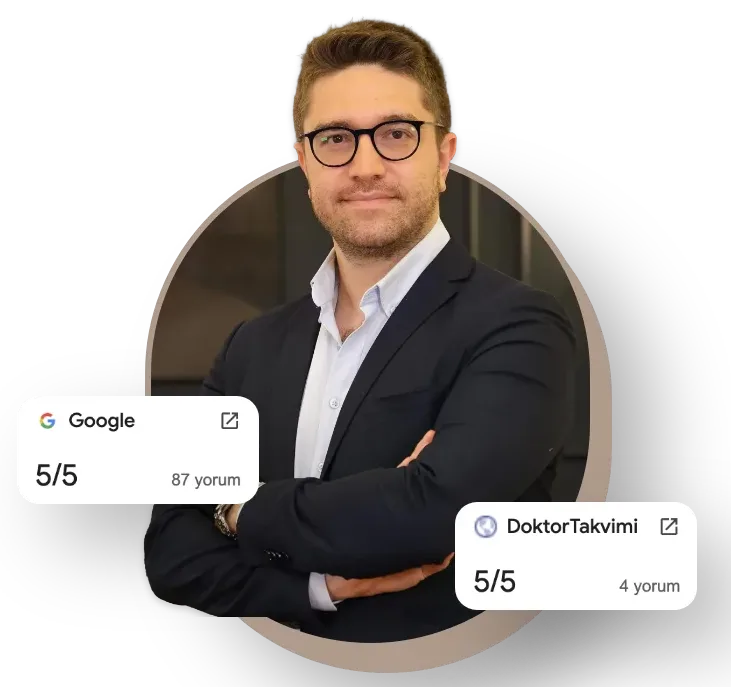
Op. Dr. Erman Ak is an internationally experienced specialist known for facial, breast, and body contouring surgeries in the field of aesthetic surgery. With his natural result–oriented surgical philosophy, modern techniques, and artistic vision, he is among the leading names in aesthetic surgery in Türkiye. A graduate of Hacettepe University Faculty of Medicine, Dr. Ak completed his residency at the Istanbul University Çapa Faculty of Medicine, Department of Plastic, Reconstructive and Aesthetic Surgery.
During his training, he received advanced microsurgery education from Prof. Dr. Fu Chan Wei at the Taiwan Chang Gung Memorial Hospital and was awarded the European Aesthetic Plastic Surgery Qualification by the European Board of Plastic Surgery (EBOPRAS). He also conducted advanced studies on facial and breast aesthetics as an ISAPS fellow at the Villa Bella Clinic (Italy) with Prof. Dr. Giovanni and Chiara Botti.
Op. Dr. Erman Ak approaches aesthetic surgery as a personalized art, tailoring each patient’s treatment according to facial proportions, skin structure, and natural aesthetic harmony. His expertise includes deep-plane face and neck lift, lip lift, buccal fat removal (bichectomy), breast augmentation and lifting, abdominoplasty, liposuction, BBL, and mommy makeover. He currently provides safe, natural, and holistic aesthetic treatments using modern techniques in his private clinic in Istanbul.