Türkçe
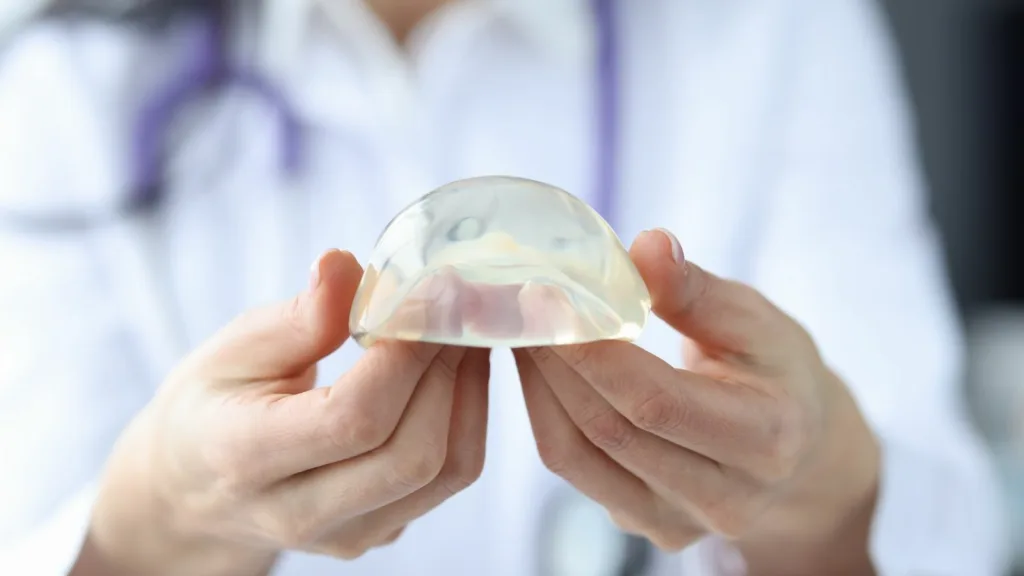
Breast silicone implant displacement is a condition we may encounter after aesthetic surgery and one that patients frequently worry about. In its simplest definition, it is the movement of the breast implant—carefully placed by the surgeon—from its original position to a different location over time. In medical literature, this is referred to as “implant malposition” or “implant displacement.”
Under normal circumstances, the breast implant should remain fixed within a specially created pocket formed by the surgeon, much like an egg resting securely in its nest. You can think of this pocket as an envelope and the implant as the letter inside it. Ideally, the envelope fully wraps around the letter and holds it in place. However, for various reasons, this envelope may expand, change shape, or tear—and when that happens, the implant may shift position.
Our body naturally forms a thin capsule around the implant, which is a foreign object. This capsule acts like a hand gently holding the implant in place. Implant displacement occurs when this natural balance is disrupted, affecting both the patient’s physical comfort and aesthetic appearance.
Implant displacement is not a single-type issue; it can occur in different directions. The most common types of displacement I encounter in my practice are:
- Lateral displacement: The implant shifts sideways toward the armpit
- Superior displacement: The implant moves upward toward the collarbone
- Inferior displacement: The implant moves downward (medically referred to as “bottoming out”)
- Medial displacement: The implants move toward the midline (commonly known as the “symmastia” or “uniboob” appearance)
Each type of displacement leads to different visual changes and symptoms in the breasts. For example, in inferior displacement, the nipple points upward and the inframammary fold appears lower than normal. In lateral displacement, when the patient brings her arms close to her body, the implants become more prominent in the armpit area.
Causes of Silicone Breast Implant Displacement
Over the years, I have encountered hundreds of implant displacement cases, and based on my experience, I can say that the causes of this issue generally fall into three main categories: surgical factors, patient-related factors, and postoperative behaviors. Many of these factors are interconnected, and in most cases, displacement results from a combination of more than one factor.
- Surgical Factors
Surgical technique and the surgeon’s experience are among the most important factors directly affecting the risk of implant displacement. The size of the implant pocket created during surgery is critically important. Think of this pocket like a garment—if it is too loose, the body inside it moves around; if it is too tight, it causes discomfort and strains the fabric. Similarly, an overly large implant pocket allows the implant to move freely inside it. Conversely, a pocket that is too small can create pressure on the implant, leading to tissue stretching over time and eventual implant displacement.
The placement plane of the implant also affects the outcome. There are different placement options such as submuscular (under the muscle), subglandular (above the muscle), or dual-plane techniques. Submuscular placement generally provides a more natural appearance and a lower risk of displacement, but the recovery process is more painful. Subglandular placement offers a less painful recovery; however, especially in patients with thin skin, the implant edges may become visible and the risk of downward displacement over time is higher.
Bleeding or hematoma formation during surgery may disrupt capsule formation by affecting the healing process. Postoperative infections can also weaken tissue integrity and increase the risk of displacement. Additionally, the size and weight of the implant are important—very large and heavy implants tend to shift downward over time due to gravity.
- Patient-Related Factors
Every patient I see in my clinic is unique, and each has different anatomical structures and tissue characteristics. Factors such as chest wall shape, the amount and quality of breast tissue, and skin elasticity influence how the implant sits and the risk of displacement. For example, in a patient with an asymmetric chest wall, the implants may shift in different ways.
Some patients naturally have looser connective tissue. Individuals with connective tissue disorders such as Ehlers-Danlos syndrome may have difficulty maintaining implant stability. In such patients, much more careful surgical planning and follow-up are required compared to the average individual.
Age should not be overlooked. Younger patients generally have more elastic and supportive tissues. However, as age advances, skin and supportive tissues lose elasticity, increasing the risk of downward displacement—especially with larger implants. Hormonal changes after menopause may also affect tissue quality and increase this risk.
Weight changes, particularly rapid weight gain or loss, directly affect breast tissue volume and support. Rapid weight loss reduces breast tissue volume but does not preserve skin elasticity, potentially leading to an “empty envelope” appearance and facilitating downward implant displacement.
- Postoperative Behaviors
As I always tell my patients, if half of surgical success lies in the surgeon’s hands, the other half depends on the patient’s postoperative behavior. There are specific rules to follow during the postoperative period, and failure to comply significantly increases the risk of implant displacement.
The first six weeks are critical for implant stabilization. During this period, heavy lifting (more than 5 kg), intense exercise, running, and jumping should be avoided. One of my patients fell while carrying her two-year-old child up the stairs three weeks after surgery, and as a result of this trauma, her implant shifted laterally. Such early trauma can strain healing tissues and cause expansion of the implant pocket.
Proper use of a supportive bra is extremely important. Specially designed postoperative compression bras help implants heal in the correct position. Particularly with larger implants, insufficient support increases the risk of downward displacement due to gravity. Another patient of mine did not regularly wear her postoperative bra because she disliked it, and within six months, both implants had shifted inferiorly.
Smoking negatively affects tissue healing and can disrupt capsule formation. By constricting blood vessels, smoking reduces oxygen delivery to tissues, delaying wound healing and decreasing tissue quality. Therefore, avoiding smoking before and after surgery is important not only for general health but also for implant stability.
Finally, failing to attend regular follow-up appointments may allow minimal displacements—detectable in the early period—to progress and become more difficult to treat. Postoperative check-ups at 1 week, 1 month, 3 months, 6 months, and 1 year are crucial for early detection of potential problems.
Symptoms and Signs of Silicone Breast Implant Displacement
Implant displacement manifests through both visual changes and physical symptoms. Most patients I see first seek consultation due to visual changes they notice in the mirror. However, some patients present with discomfort or unusual sensations even before noticing visible differences. Early recognition of these symptoms is critical for treatment success.
- Visual Symptoms
The most obvious visual change is disruption of breast symmetry. A noticeable difference develops between breasts that were previously symmetrical. One breast may sit higher, lower, or more laterally than the other. Patients often describe the situation by saying, “I noticed one of my breasts looks different,” or “One side of my bra feels empty.”
Changes in breast contour are also important findings. When implant displacement occurs, the natural round shape of the breast is altered. Depending on the direction of displacement, different appearances emerge:
- Lateral displacement: Abnormal fullness appears toward the armpit. When the patient brings her arms closer to her body, the implant becomes prominent in the axillary area. From the front view, the outer portion of the breast appears full, while the inner portion looks empty.
- Superior displacement: Excessive fullness appears in the upper part of the breast, sometimes even creating a bulge near the collarbone. This can cause an unnatural appearance, especially in low-cut clothing.
- Inferior displacement (bottoming out): The nipple points upward and the inframammary fold sits lower than normal. There is excessive fullness in the lower part of the breast and a sense of emptiness in the upper part. This condition is also referred to as “Snoopy deformity” because the side profile resembles the nose of the cartoon character Snoopy.
- Medial displacement: The implants move toward the midline, sometimes nearly touching. This creates unnatural fullness in the cleavage area and is referred to as “symmastia” or “uniboob.”
The position of the inframammary fold may also change. Particularly in inferior displacement, the inframammary fold sits lower than normal. This change becomes more noticeable when the patient is standing or leaning slightly forward.
- Physical Symptoms
Physical discomfort varies depending on the severity of displacement. Initially, there may be a mild feeling of tension or discomfort. Patients often describe a sensation that “something isn’t in the right place.” Pain is usually mild and increases with movement. Especially during arm movements, there may be a pulling sensation in the direction of displacement.
Feeling the implant shift during movement may be noticeable when rising from a lying position or lifting the arms. One of my patients described it as, “When I get out of bed, I can feel the implant sliding downward with gravity.” Some patients report a “sliding” or “rolling” sensation of the implant.
Tissue tension and skin changes may also occur. In the direction of displacement, the skin may appear tight, shiny, and thin. On the opposite side, the skin may look loose and wrinkled. In advanced cases—particularly inferior displacement—stretch marks (striae) may develop under the breast.
Difficulty with daily activities is also common. Discomfort may increase during sports, running, or jumping. Problems wearing a bra—such as one side feeling empty or the implant overflowing from the bra—are frequent complaints. Sleep position restrictions may arise; some patients report being unable to sleep in certain positions.
- Progression of Symptoms
Implant displacement is generally a slowly progressive process. In the early stages, there may be minimal asymmetry noticeable only in certain positions or movements. Over time, this asymmetry becomes more pronounced and permanent. Displacement that initially corrects when lying down may eventually become visible in all positions.
If left untreated, the degree of displacement may increase and correction may become more complex. Long-term displacement can also lead to permanent changes in surrounding tissues. For example, prolonged inferior displacement may cause the inframammary fold to permanently descend. In such cases, revision surgery requires not only repositioning the implant but also reconstructing the fold.
Symptom progression depends on factors such as implant size, tissue characteristics, and daily activities. In larger implants, displacement may progress more rapidly due to gravity. Similarly, patients who engage in intense sports or physically demanding work may experience faster worsening of symptoms.
Treatment Options for Silicone Breast Implant Displacement
The treatment of implant displacement is as unique as a fingerprint. Over the years, I have performed hundreds of revision surgeries and have seen the importance of individualizing the treatment plan according to the degree of displacement, the patient’s symptoms, anatomical characteristics, and expectations. The treatment spectrum ranges from conservative approaches to comprehensive surgical revision.
Conservative (Non-Surgical) Treatment Approaches
In minimal displacements, newly developing cases, or patients unsuitable for surgery for various reasons, conservative treatment options may be considered. However, I must clearly state that conservative treatments are generally temporary solutions and cannot completely correct an established displacement.
Special supportive bras may slow the progression of implant displacement. Particularly in inferior displacement, bras with wide bands and strong support under the breast may be beneficial. For some patients, I have recommended specially designed compression bandages or medical corsets. These supports help limit implant movement during daily activities, especially in active patients.
Positioning techniques may sometimes help in early displacement cases. For example, in superior displacement, placing light weight over the implant at night (such as a sandbag) or sleeping in specific positions may help the implant descend. However, these methods are effective only in very early and minimal displacement cases.
Chest muscle strengthening exercises may contribute to implant stability—particularly in submuscular placements—by enhancing muscular support. However, proper technique is essential; incorrect execution or excessive strain may worsen displacement. Therefore, any exercise program should be planned under the supervision of a physiotherapist.
Massage techniques must be approached with great caution. Some surgeons recommend specific massage techniques in the early postoperative period to help shape the implant pocket. However, once displacement begins, massage may worsen the condition. Especially in lateral displacement, massaging medially may seem logical but often further expands the pocket and aggravates the issue.
I always clearly explain the limitations of conservative treatments to my patients. These methods may provide temporary relief for those not ready for surgery or wishing to postpone it, but permanent correction usually requires surgical revision.
Surgical Treatment Options
Most implant displacement cases require surgical revision for satisfactory and lasting results. Revision surgery is more complex than primary breast augmentation and requires greater experience. The surgical approach is determined by the type, degree, and underlying cause of displacement.
- Capsulotomy and Capsulectomy
Management of the capsule formed around the implant is one of the cornerstones of treatment. Capsulotomy involves cutting the capsule, while capsulectomy involves partial or complete removal of the capsule. The choice of technique depends on the condition of the capsule and the direction of displacement.
In lateral displacement, removal of the lateral capsule and tightening of the medial capsule may be necessary. In inferior displacement, removal of the lower capsule and creation of a new inframammary fold may be required. Total capsulectomy may be preferred in cases involving capsular contracture or when implant replacement is planned.
Proper capsule management provides the foundation for creating a new implant pocket. However, overly aggressive capsule removal may lead to tissue damage, increased bleeding risk, and healing problems. Therefore, capsule intervention must be carefully planned for each patient.
- Reshaping the Implant Pocket
The most critical stage of surgical revision is recreating the implant pocket. This is essential to prevent recurrence. Various techniques are used to reshape the pocket.
Internal suture techniques are used to narrow an expanded pocket. Known as capsulorrhaphy, this procedure involves bringing the pocket walls together using absorbable or non-absorbable sutures. For example, in lateral displacement, the lateral pocket wall is narrowed medially with sutures. In inferior displacement, the lower pocket wall is sutured upward to create a new fold.
Creation of a neosubmammary fold is particularly important in inferior displacement cases. In this technique, permanent sutures are placed on the chest wall to form a new inframammary fold. These sutures act as a barrier preventing the implant from shifting downward again.
The use of acellular dermal matrix (ADM) or synthetic mesh may provide long-term stability, especially in patients with weak tissue support. These biological or synthetic materials gradually integrate into the body’s own tissue and provide strong implant support. ADMs are particularly preferred in recurrent displacement cases or in patients with very thin tissue coverage. However, they are costly and may increase the risk of complications such as infection or seroma in some patients.
- Implant Replacement or Repositioning
In some cases, the size, shape, or type of the current implant may predispose to displacement. In such situations, implant replacement may be necessary. For example, if a very large and heavy implant causes inferior displacement, it may be replaced with a smaller or lighter implant. Similarly, replacing a round implant with an anatomical (teardrop-shaped) implant may offer better stability in certain displacement types.
Changing the implant placement plane may also be considered. For instance, if an implant placed in a subglandular position shows recurrent lateral displacement, conversion to a submuscular or dual-plane position may be performed. Muscular support enhances implant stability, especially in patients with thin tissues. However, changing the placement plan requires more complex surgery and a longer recovery period.
Factors Affecting Treatment Selection
Many factors must be considered when developing a treatment plan. The “best” treatment varies for each patient depending on their specific condition, anatomy, and expectations.
The degree and type of displacement directly influence treatment choice. Minimal lateral displacement may be corrected with simple capsulorrhaphy, whereas severe inferior displacement may require capsulectomy, creation of a neosubmammary fold, and possibly implant replacement.
The patient’s age and general health are also important. A more comprehensive revision may be planned for a young and healthy patient, whereas a more conservative approach may be preferred for older patients or those with comorbidities.
The number of previous surgeries and tissue quality affect surgical success. In patients who have undergone multiple revisions, tissues may be thinned and weakened, necessitating additional support materials such as ADM.
The patient’s expectations and lifestyle must also be considered. For patients who engage in active sports or physically demanding work, a stronger support system may be required. Likewise, for patients with high aesthetic expectations, a comprehensive revision plan aimed at optimal results may be necessary.
Establishing realistic expectations is critical. Patients must clearly understand that revision surgery is more complex than primary surgery and that outcomes may be less predictable. Additionally, the recovery process after revision may be longer and sometimes more challenging.
Combined Approaches
In my clinical practice, most successful outcomes require a combination of multiple techniques. A single method may not be sufficient to completely resolve a complex problem.
For example, in inferior displacement, a combination of capsulectomy + neosubmammary fold creation + implant replacement + ADM use may be required. In lateral displacement, lateral capsulectomy + medial capsulorrhaphy + plane change (from subglandular to submuscular) may be considered.
These combined approaches aim both to eliminate the cause of displacement and to prevent recurrence. However, they involve more complex surgery, making the surgeon’s experience critically important.
Minimally Invasive Options
With technological advancements, some minimally invasive approaches have emerged. Endoscopic techniques allow access to the implant pocket and necessary corrections through smaller incisions, potentially resulting in less scarring and faster recovery.
Injection-based treatments may be considered in minimal displacements or in patients unsuitable for surgery. For example, hyaluronic acid or autologous fat injections may be used to correct minor asymmetries. However, these methods are generally insufficient to correct established implant displacement.
The effectiveness and long-term outcomes of these minimally invasive options have not yet been fully established. Patient selection and expectation management are even more important with these approaches. Patients must be given realistic information about their limitations and success rates.
Risks, Limitations, and Realistic Expectations
Although treatment of implant displacement generally yields successful outcomes, like any medical intervention, it carries risks and limitations. My years of experience have shown that fully and honestly informing patients is both an ethical obligation and critical for treatment satisfaction.
- Surgical Risks
Every surgical procedure carries certain risks. General surgical risks include bleeding, infection, anesthesia complications, wound healing problems, and scar formation. Although modern surgical techniques and anesthesia practices minimize these risks, they cannot eliminate them entirely.
There are also risks specific to revision surgery. Scar tissue from previous operations can make revision surgery more challenging. Scar tissue may increase bleeding risk and reduce surgical field visibility. Additionally, multiple revisions may decrease tissue quality, making placement and support of a new implant more difficult.
Rare but serious complications are also possible. Systemic complications such as deep vein thrombosis (DVT) and pulmonary embolism may occur, particularly in prolonged surgeries or in patients with risk factors. Early mobilization, compression stockings, and, if necessary, anticoagulant medications may be used to reduce these risks.
Implant-specific complications include capsular contracture, implant rupture, seroma formation, and recurrence of malposition. Capsular contracture—the hardening and tightening of the capsule around the implant—may occur at a higher rate after revision surgery compared to primary surgery. Implant rupture may occur due to manipulation during revision. Seroma refers to fluid accumulation around the implant and usually requires drainage.
- Limitations of Treatment
There are natural limitations to implant displacement treatment, and it is important for patients to understand them. Perfect symmetry may not always be achievable. The human body is naturally asymmetric, and complete symmetry through surgery is often impossible. Especially in patients who have undergone multiple revisions, tissue quality may limit optimal results.
Loss of tissue elasticity—particularly in older patients or those who have undergone multiple surgeries—may affect revision outcomes. Tissues that have lost elasticity may not sufficiently support the implant, potentially leading to future displacement. Similarly, scar tissue reduces flexibility and adaptability.
Anatomical asymmetries may also influence treatment results. Chest wall shape, rib structure, or natural breast asymmetry may affect the postoperative appearance. These factors should be evaluated and explained before surgery.
In some cases, more than one surgery may be required to achieve fully satisfactory results. Particularly in complex cases, resolving all issues in a single procedure may not be possible. This should be clearly communicated to the patient from the outset, and expectations should be managed accordingly.
- Risk of Recurrence
There is always a risk of recurrence after treatment of implant displacement, and patients should be informed accordingly. Recurrence rates vary depending on the type of displacement, the surgeon’s experience, the techniques used, and the patient’s tissue characteristics. Generally, inferior displacement (bottoming out) has the highest recurrence rate, followed by lateral displacement.
If underlying anatomical or tissue quality problems exist, the recurrence risk increases. Very thin skin coverage, weak connective tissue, chest wall deformities, or prior radiation therapy may elevate the risk. The patient’s lifestyle and adherence to postoperative instructions are also important; heavy lifting, intense exercise, or failure to use a supportive bra may increase recurrence risk.
Various preventive measures may reduce recurrence risk. Appropriate implant selection (size, shape, weight), correct surgical technique, use of support materials (such as ADM) when necessary, and careful postoperative follow-up can help minimize recurrence. Strict adherence to postoperative instructions is also critically important.
- Realistic Expectation Management
Establishing realistic expectations is critical for a successful treatment experience. Instead of striving for “perfection,” focusing on “improvement” and “satisfactory” results is healthier. I always emphasize to my patients that the goal of revision surgery is not perfection but meaningful improvement.
Factors influencing patient satisfaction include preoperative expectations, surgeon-patient communication, postoperative care, and the patient’s psychological state. Alignment between expectations and reality is the most important determinant of satisfaction; a patient with unrealistic expectations may be dissatisfied even with a technically perfect result.
It should be emphasized that revision surgery differs from primary surgery. It is generally more complex, the recovery process may be longer, and results may be less predictable. However, with proper technique, an experienced surgeon, and realistic expectations, most patients can achieve satisfactory outcomes.
- Alternative Approaches
For some patients, complete implant removal (explantation) may be an option. This may be considered particularly for patients experiencing recurrent complications, those dissatisfied with implants, or those wishing to return to a more natural appearance. Depending on the condition of the breast tissue after explantation, additional procedures (such as mastopexy) may be required.
Autologous tissue reconstruction is another alternative. Fat grafting (lipofilling) involves harvesting the patient’s own fat and injecting it into the breast area. This method may be used to correct small asymmetries or provide volume after implant removal. In cases requiring more comprehensive reconstruction, flap surgery (such as DIEP flap or latissimus dorsi flap) may be considered; however, this is a more complex procedure requiring a specialized team.
- Impact on Quality of Life
When making treatment decisions, potential impacts on quality of life should be considered. Physical activity restrictions may be significant, especially for patients with active lifestyles. After revision, certain sports or activities (weightlifting, contact sports) may need to be restricted or modified.
Psychological effects should also be considered. Breast appearance is important for many women in terms of self-image and confidence. A successful revision may positively impact these areas; however, unrealistic expectations may lead to disappointment. For some patients, preoperative psychological counseling may be beneficial.
Social life effects should also be evaluated. The recovery process may temporarily limit participation in social activities. Additionally, changes in breast appearance may influence clothing choices or participation in certain activities for some patients.
Successful treatment generally results in significant improvement in quality of life. Reduced pain, improved body image, and increased self-confidence may make daily life more enjoyable. However, this process requires patience and adaptation; it may take months to see final results and achieve full adjustment.
Op. Dr. Erman Ak is an internationally experienced specialist known for facial, breast, and body contouring surgeries in the field of aesthetic surgery. With his natural result–oriented surgical philosophy, modern techniques, and artistic vision, he is among the leading names in aesthetic surgery in Türkiye. A graduate of Hacettepe University Faculty of Medicine, Dr. Ak completed his residency at the Istanbul University Çapa Faculty of Medicine, Department of Plastic, Reconstructive and Aesthetic Surgery.
During his training, he received advanced microsurgery education from Prof. Dr. Fu Chan Wei at the Taiwan Chang Gung Memorial Hospital and was awarded the European Aesthetic Plastic Surgery Qualification by the European Board of Plastic Surgery (EBOPRAS). He also conducted advanced studies on facial and breast aesthetics as an ISAPS fellow at the Villa Bella Clinic (Italy) with Prof. Dr. Giovanni and Chiara Botti.
Op. Dr. Erman Ak approaches aesthetic surgery as a personalized art, tailoring each patient’s treatment according to facial proportions, skin structure, and natural aesthetic harmony. His expertise includes deep-plane face and neck lift, lip lift, buccal fat removal (bichectomy), breast augmentation and lifting, abdominoplasty, liposuction, BBL, and mommy makeover. He currently provides safe, natural, and holistic aesthetic treatments using modern techniques in his private clinic in Istanbul.