Deutsch
 Türkçe
 Nederlands
 Français
 Svenska

Apple body type is a body structure in which adipose tissue is predominantly accumulated in the abdomen, waist, and chest areas, causing the upper body to appear wider compared to the lower body. The waistline is not clearly defined, trunk volume is prominent, and the legs are relatively thinner.
The characteristics of the apple body type are defined by broad shoulders and chest structure, pronounced fat accumulation around the abdomen, and hips that remain narrow relative to the upper body. Weight gain is mostly concentrated in the upper torso; fat accumulation increases in the central region.
The question of how to identify the apple body type is evaluated through anthropometric measurements. A waist circumference that is close to or wider than the hip circumference, a high waist-to-hip ratio, and predominantly abdominal fat accumulation are distinguishing criteria.
Fat distribution in the apple body type is associated with genetic factors, age, and hormonal variables. An increase in visceral fat tissue may be linked to insulin resistance and cardiometabolic risks; therefore, lifestyle and weight control are clinically important.
| Things You Should Know | Information |
| Definition of the apple body type | The apple body type is a body shape in which most of the body weight is concentrated in the abdomen, waist, and chest areas, with the upper body being fuller than the lower body. The waistline is not clearly defined. |
| Distinct physical characteristics | Broad chest and waist circumference, an indistinct waistline, slim hips and legs. Fat accumulation is especially concentrated in the abdominal area. |
| How it is identified | If tape measurements show that the waist and chest circumference are significantly larger than the hip circumference and the waist curve is unclear, it may indicate an apple body type. In the mirror, the upper body appears fuller while the lower body is slimmer. |
| Body measurement ratio | Chest and waist circumference > Hip circumference. The waist circumference is distinctly wide. |
| Common gender | Seen in both women and men. It becomes more common in women especially after menopause. It is one of the most common basic body types in men. |
| Advantages | Arms and legs are generally slim. When weight is lost, rapid slimming around the waist may be observed. |
| Points to consider | Fat accumulation around the abdomen and waist increases the risk of visceral fat. This can lead to health problems such as heart disease and type 2 diabetes. |
| Suitable exercise types | Cardio (brisk walking, swimming, cycling) should be used to support fat burning, and core-focused exercises should be used to strengthen the abdominal muscles. |
| Nutrition recommendations | Foods with a low glycemic index, high fiber content, and anti-inflammatory properties should be preferred. Sugary and fatty foods should be avoided. |
| Clothing recommendations | V-necklines, wrap-style tops, and draped blouses that camouflage the waist should be preferred to create a more balanced appearance. Emphasizing the lower body with trousers and skirts can help achieve balance. |
What Is the Apple Body Type and Why Does It Occur?
The apple body type is the most understandable representation of what is defined in medical literature as “android fat distribution” or “central obesity.” To visualize this body type, it is enough to think of an apple; while the rounded contours are concentrated in the central part of the torso, the lower parts remain slimmer. In this morphological structure, adipose tissue tends to accumulate stubbornly around the waist, rib cage, and abdominal cavity instead of descending to the hips and thighs.
The mechanism behind this formation is quite complex. Genetic predisposition is certainly a primary determinant; if individuals with broad waists are common in your family, your likelihood of having this structure is higher. However, the main triggers that activate genetics are hormones. Especially elevated levels of cortisol, known as the stress hormone, insulin resistance, conditions such as polycystic ovary syndrome, or hormonal transition periods like menopause and andropause direct the body’s fat storage command toward the “abdominal region.” The fat accumulation seen in the apple type does not remain only under the skin; unfortunately, it also surrounds the organs.
How Is the Apple Body Type Identified and What Are Its Symptoms?
Recognizing your body in front of the mirror is actually not difficult. However, from a physician’s perspective, we look for very specific signs that distinguish the apple body type from others. Individuals with this structure often consult us with the complaint, “When I gain weight, I only gain it in my belly, and when I lose weight, my legs get thinner but my belly remains.” The body’s center of gravity has shifted upward.
The most distinctive apple body type characteristics that can be visually identified are as follows:
- Broad shoulders
- Full chest structure
- Indistinct waist curve
- Flat hips
- Slim legs
- Slim arms
- Wide back
- Protruding abdomen
In addition, to confirm the clinical diagnosis, we use a simple mathematical calculation called the “Waist-to-Hip Ratio.” When you measure the narrowest part of your waist (usually at the level of the navel) and the widest part of your hips with a tape measure, we divide the waist measurement by the hip measurement. A result above 0.85 in women and 0.90 in men is mathematical evidence of an apple-type body structure.
Is the Apple Body Type Risky in Terms of Health?
Unfortunately, as a physician, my answer to this question is yes. While the pear body type (fat accumulation in the hip area) leads more to mechanical problems (knee pain, cellulite, etc.), the apple body type is directly related to the metabolic system. The fats accumulated in the abdominal area are divided into two types: subcutaneous fat and visceral (internal organ) fat. What is dangerous in the apple type is the hard fat tissue that surrounds the internal organs and pushes the abdominal wall outward from the inside.
Visceral fats do not merely serve as a storage depot in the body; they function almost like a factory producing toxic chemicals. They continuously release fatty acids and pro-inflammatory substances into the bloodstream. In the long term, this creates a foundation for a serious condition known as “Metabolic Syndrome.”
The health risks that apple-type fat accumulation can trigger include:
- Type 2 diabetes
- Insulin resistance
- High blood pressure
- Heart disease
- Fatty liver disease
- Sleep apnea
- High cholesterol
- Stroke risk
- Gallstones
For this reason, aesthetic interventions aimed at the apple body type are actually a major step toward improving the patient’s overall health profile. Reducing the load around the abdomen directly contributes to preserving systemic health.
Why Is the Apple Body Type Difficult to Shape with Diet and Exercise?
Many of my patients come to the clinic lamenting, “I’ve been doing crunches and dieting for months, my legs have become like toothpicks, but my belly is still there.” This situation does not stem from a lack of willpower, but from your body’s biological defense mechanisms. In the apple body structure, fat cells in the abdominal area have receptors that are more resistant to metabolic breakdown.
Since vital organs (liver, stomach, intestines) are located in this region, the body considers the fat reserve here as an “emergency storage” and wants to use it last. In addition, weight fluctuations over the years, pregnancies, or the aging process lead to relaxation of the abdominal muscles and loss of skin elasticity. Exercise strengthens muscles but cannot reunite loosened and separated abdominal muscles (diastasis recti) or tighten sagging skin. It is precisely at this point, where the limits of physiology are reached, that aesthetic surgical methods come into play.
Which Surgical Methods Are Suitable for the Apple Body Type?
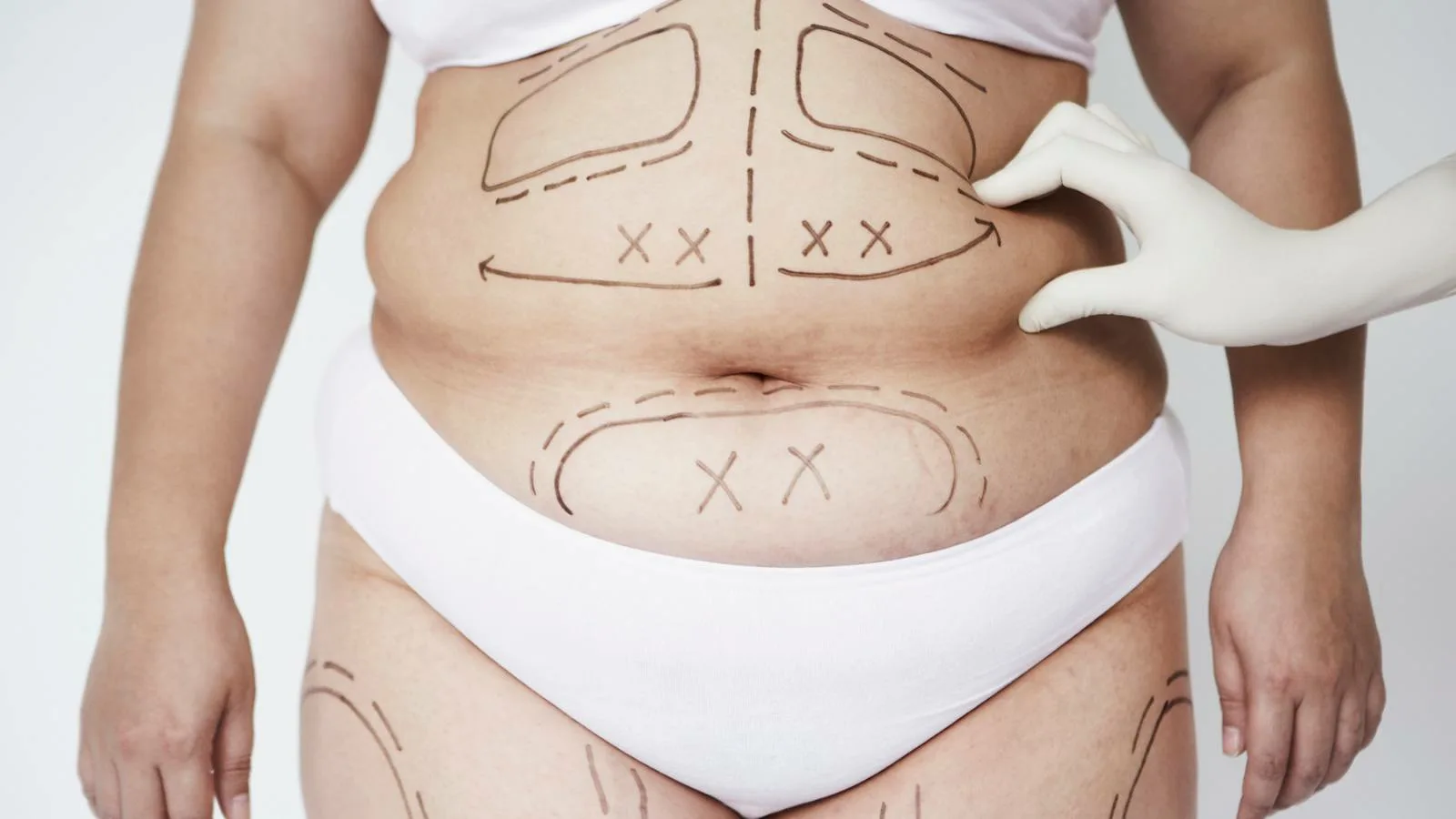
When evaluating a patient with an apple body type, there is no single correct method; the patient’s skin quality, amount of fat, and muscle condition determine the course of treatment. Our primary goal is to break the wide and rounded torso line and create a more contoured, defined, and proportionate silhouette.
The surgical options we consider in treatment planning include:
- Liposuction
- Vaser Liposuction
- Laser Liposuction
- Mini Tummy Tuck
- Full Tummy Tuck
- 360-Degree Lift
- Fleur-de-lis Technique
Which of these methods is chosen is determined through a detailed physical examination. Deciding whether to focus solely on fat or on excess tissue is critical for the success of the outcome.
Is Liposuction Alone Sufficient in the Apple Body Type?
If the patient is young, has good skin elasticity, no separation of the abdominal muscles (herniation) due to childbirth or weight fluctuations, and the problem is only localized fat accumulation, liposuction can yield excellent results. Especially modern technologies have significantly strengthened our ability to shape the apple body type.
Technologies such as Vaser Liposuction, which use ultrasonic sound waves, selectively break down fat without damaging connective tissue and provide a certain degree of skin tightening. Apple-type bodies generally lack a natural waist indentation. With this method, we can create an artificial waist curve by aggressively yet controlled removal of fat from the waist area, flanks, and anterior abdominal wall. It is even possible to reveal the shadows of the abdominal muscles and achieve a more athletic appearance using “High Definition” (Hi-Def) techniques. However, it must be remembered that if the skin is sagging, removing fat alone will cause the skin to wrinkle more, and in such cases, liposuction alone is never recommended.
What Is the Relationship Between the Apple Body Type and Tummy Tuck (Abdominoplasty)?
In the majority of patients with an apple body type, there is not only excess fat but also excess skin and muscle laxity. The pressure created by intra-abdominal fat over time pushes the muscles that form the abdominal wall outward, creating a separation along the midline. These patients complain of abdominal bloating after eating, no matter how much weight they lose.
In this scenario, the gold standard is “Abdominoplasty,” or tummy tuck surgery. This procedure should not be viewed merely as a skin excision. For apple-type patients, the most vital component of this surgery is muscle repair (plication), which we refer to as the “internal corset.” The abdominal muscles are permanently sutured together along the midline to flatten the abdominal wall and narrow the waist. Subsequently, the sagging skin and underlying fat tissue are removed. This procedure is the most effective method to free the patient from a “barrel” appearance and bring them closer to an “hourglass” form.
What Is the Fleur-de-lis Technique for Advanced Apple Body Types?
In some patients, especially after gastric sleeve surgery or massive weight loss, apple-type deformity is much more advanced. In these patients, the skin does not only sag from top to bottom; the waist circumference is so wide that there is also laxity from the sides. Classic tummy tuck surgery may not sufficiently narrow the waist in such cases.
In these situations, we apply a special method called the “Fleur-de-lis” or “Corset” technique. In addition to the classic horizontal incision on the abdomen, an additional vertical incision is made along the midline. This allows the tissues to be gathered both vertically and horizontally toward the center. A vertical scar remains; however, the dramatic and satisfying narrowing and shaping achieved in the waist area is often preferred by patients over the presence of a scar. This technique is one of the most powerful surgical maneuvers that completely transforms the apple form.
Is 360-Degree Body Contouring (Belt Lipectomy) Necessary?
The apple body type may not be limited to the anterior abdominal wall alone; fat accumulation and sagging may extend to the flanks (“love handle” area) and the back. Even if the patient appears flat from the front, the wide and boxy appearance may persist when viewed from the back. In such cases, we prefer the “Belt Lipectomy” or “360-Degree Tummy Tuck,” in which the surgical incision encircles the entire body like a belt.
With this surgery, the following areas are reshaped in the same session:
- Anterior abdominal wall
- Flanks
- Lower back
- Upper buttocks
- Outer thighs
This procedure is a very comprehensive intervention that completely reconstructs the lower half of the torso, lifts the buttocks, and narrows the waist circumferentially. Although the recovery process requires a bit more patience, it is the most effective solution for completely eliminating the apple-type silhouette.
Do Non-Surgical Technologies Work for the Apple Body Type?
With advancements in technology, various devices have been developed for patients seeking alternatives to surgery. However, as a physician, I must honestly state that these devices are intended for “touch-up” purposes. It is not possible to fully correct an apple-type body with significant skin sagging or muscle separation using devices alone.
Nevertheless, we utilize these technologies in patients who are not suitable for surgery, cannot undergo anesthesia, have very mild deformities, or to maintain results after surgery. Technologies such as high-intensity focused electromagnetic energy (HIFEM) or radiofrequency (RF) support fat burning while activating muscles.
Commonly used non-surgical body contouring technologies include:
- EmSculpt Neo
- Cryolipolysis
- Radiofrequency
- Cavitation
- Lymphatic Drainage
How Should the Preparation Process for Apple Body Type Surgery Be?
The foundations of a successful outcome are laid before entering the operating room. Because the risk of visceral (internal organ) fat accumulation is high in apple-type patients, we strongly recommend that patients lose weight and approach their ideal weight before surgery. As surgeons, we can intervene on subcutaneous fat, but we cannot operate on fat located between the abdominal organs. As the patient loses weight, intra-abdominal pressure decreases, allowing us to suture the abdominal muscles much tighter and achieve a slimmer waist.
Key points to consider during the preparation process include:
- Smoking cessation
- Discontinuation of blood thinners
- Pausing herbal teas
- Approaching ideal body weight
- Diabetes control
- Blood pressure regulation
Smoking, in particular, severely impairs blood circulation and seriously threatens wound healing, making it critically important to stop at least 4 weeks before surgery.
What Is the Recovery Period Like After Apple Body Type Surgery?
After apple-type body contouring surgeries (tummy tuck and liposuction), our patients are usually accommodated in the hospital for one night. Upon discharge, you will be fitted with a customized compression garment. This garment should be worn day and night for 4 to 6 weeks to control swelling and ensure adaptation of the reshaped tissues to their new position.
In the first days, you may need to walk slightly bent forward due to tension in the abdominal area; this is completely normal and reduces stress on the sutures. Thanks to modern pain management protocols, pain is generally very manageable and is more commonly felt as muscle soreness. Drains (thin tubes that remove accumulated fluid) are usually removed within 3–4 days.
Points to consider during the recovery period include:
- Wearing the compression garment
- Sleeping on your back
- Adequate water intake
- Light walking
- Avoiding sudden movements
- Wound site hygiene
Patients can usually return to desk jobs and social life within 7–10 days. However, returning to the gym and heavy physical activities requires waiting 6–8 weeks to allow proper tissue healing.
What Should the Nutrition Plan Be for the Apple Body Type?
Aesthetic surgery provides an excellent starting point and motivation, but maintaining the results is entirely up to you. Individuals genetically predisposed to the apple body type may experience enlargement of remaining fat cells if they return to unhealthy habits after surgery, or worse, increased visceral fat accumulation that causes the abdomen to bulge again from the inside. This “internal belly” appearance can overshadow the aesthetic outcome of surgery.
Therefore, a sustainable nutritional model should be adopted in the postoperative period and throughout life. The most ideal dietary model for the apple type is the “Mediterranean Diet,” which breaks insulin resistance and reduces inflammation.
Foods that should be prioritized in the nutrition plan include:
- Olive oil
- Fish
- Walnuts
- Almonds
- Flaxseed
- Vegetables
- Legumes
- Whole grains
- Yogurt
Foods that should be avoided or consumed in very limited amounts include:
- White bread
- Sugary beverages
- Pastries
- Processed meats
- Fried foods
- Processed foods
- Alcohol
Alcohol and simple sugars, in particular, are the greatest allies of abdominal fat accumulation and the biggest enemies of individuals with an apple body type.
Frequently Asked Questions
How is the apple body type identified?
The apple body type is a body structure in which the waist and abdominal circumference are wide, the chest is full, and the hips and legs appear relatively slimmer. Body weight is generally concentrated in the upper body.
What is the difference between the apple body type and the oval body type?
Although both show fat accumulation in the upper body, the apple type stands out with a more pronounced abdominal width. The oval type has softer transitions, while the apple type has more distinct roundness.
Where does weight accumulate in the apple body type?
Weight gain occurs largely in the abdomen, waist, and chest areas. Less fat is stored in the hips and legs, causing the upper body to appear more dominant.
How should people with an apple body type dress?
Clothing that narrows the upper body and balances the lower body should be preferred. V-neck tops, long jackets, and A-line skirts make apple body types appear more proportionate.
How can the apple body type be shaped?
Abdominal fat should be reduced through cardio-focused exercises, and body balance should be achieved by developing lower body muscles. Exercises targeting the waist and back muscles are recommended.
What health risks does the apple body type carry?
Abdominal fat accumulation may increase metabolic risks such as type 2 diabetes, hypertension, and heart disease. Therefore, healthy lifestyle habits are critical for the apple type.
How does the apple body type change with age?
Menopause and hormonal changes may increase abdominal fat accumulation. Muscle loss with age can also disrupt body proportions, making the apple form more pronounced.
Which sports are suitable for the apple body type?
Cardiovascular exercises such as swimming, walking, and cycling support fat burning. In addition, lower body muscles can be strengthened with exercises like squats and lunges.
What are the advantages of the apple body type?
A full chest structure provides an advantage in clothing. A slim lower body can create the appearance of long legs. Body shape can change relatively quickly with exercise.
How can the apple body type be balanced aesthetically?
Body proportions can be balanced by applying liposuction to the abdomen and waist areas. A more contoured appearance can be achieved by fat injection into the hip area. If necessary, a tummy tuck procedure may also be performed.

Op. Dr. Erman Ak is an internationally experienced specialist known for facial, breast, and body contouring surgeries in the field of aesthetic surgery. With his natural result–oriented surgical philosophy, modern techniques, and artistic vision, he is among the leading names in aesthetic surgery in Türkiye. A graduate of Hacettepe University Faculty of Medicine, Dr. Ak completed his residency at the Istanbul University Çapa Faculty of Medicine, Department of Plastic, Reconstructive and Aesthetic Surgery.
During his training, he received advanced microsurgery education from Prof. Dr. Fu Chan Wei at the Taiwan Chang Gung Memorial Hospital and was awarded the European Aesthetic Plastic Surgery Qualification by the European Board of Plastic Surgery (EBOPRAS). He also conducted advanced studies on facial and breast aesthetics as an ISAPS fellow at the Villa Bella Clinic (Italy) with Prof. Dr. Giovanni and Chiara Botti.
Op. Dr. Erman Ak approaches aesthetic surgery as a personalized art, tailoring each patient’s treatment according to facial proportions, skin structure, and natural aesthetic harmony. His expertise includes deep-plane face and neck lift, lip lift, buccal fat removal (bichectomy), breast augmentation and lifting, abdominoplasty, liposuction, BBL, and mommy makeover. He currently provides safe, natural, and holistic aesthetic treatments using modern techniques in his private clinic in Istanbul.