Türkçe
Türkiye is home to some of the world’s best eyelid surgery specialists thanks to the intensity of its surgical practice and medical education focused on academic excellence. Turkish aesthetic and plastic surgeons are globally recognized in periocular aesthetics due to their extensive experience involving thousands of cases and their advanced mastery of innovative blepharoplasty techniques. Türkiye’s world-class health tourism infrastructure and strictly monitored hospital accreditations provide a safe foundation for this surgical success. The attention given to functional anatomy and the high satisfaction rates achieved in aesthetic eyelid procedures have placed Turkish physicians among the most preferred specialists internationally and further strengthened this leadership.
What Kind of Training Do Doctors in Türkiye Receive in Eyelid Surgery?
Plastic surgery residency training in Türkiye has an intensive structure when compared with similar curricula around the world. Graduating from medical school is only the beginning of the demanding journey toward becoming a surgeon. During their training, physicians do not merely learn aesthetic techniques; they also take part in complex procedures such as microsurgery, burn treatment, and facial reconstruction following severe trauma. This demanding pace allows them to learn through direct experience how tissues respond and how facial proportions should be balanced.
The results of this well-established training are frequently recognized internationally. Turkish physicians regularly achieve high success rates in examinations held by institutions with demanding standards, such as the European Board of Plastic, Reconstructive and Aesthetic Surgery. Academic knowledge increases the surgeon’s sensitivity toward anatomy. Throughout these long years, physicians gain experience not only in surgical techniques but also in communicating properly with patients, listening to their concerns, and understanding their expectations. Effective patient communication is considered one of the factors that directly influence the success of an operation. For patients, this means that the procedure can be performed with a high level of safety, risks can be minimized, and the recovery period can be managed more comfortably.
Why Is Eyelid Surgery Not Merely a Cosmetic Procedure for Our Health?
There is a common perception that procedures around the eyes are generally performed to achieve a younger appearance. Gaining a more energetic expression is certainly a valuable part of the process, but sagging of the upper eyelids often causes functional limitations as well. With advancing age or genetic predisposition, sagging eyelid skin places physical weight over the eyes. This weight may cause the eyelids to descend like curtains and narrow the field of vision.
When our visual field becomes restricted, the brain automatically develops a mechanism to help us see more clearly. To keep the eyelids elevated, we unconsciously contract the forehead muscles throughout the day. This constant contraction is often the primary cause of eye fatigue and severe headaches experienced toward the evening. Persistent muscle tension may place pressure on delicate nerves and contribute to chronic migraine-like pain. When surgeons remove the sagging tissue, the load on the eyelid decreases and the muscles relax. Many patients notice not only a refreshed aesthetic appearance after surgery but also a reduction in headaches. Complaints caused by eyelid sagging include:
- Restriction of the visual field
- Increasing eye fatigue in the evening
- Tension in the temples and forehead
- Difficulty focusing while reading
- Lines caused by excessive use of the forehead muscles
- A sensation of dry eyes
How Is Upper Eyelid Surgery Planned to Achieve a Natural Result?
Every person’s face tells a unique story, and facial proportions are as distinctive as fingerprints. The key to achieving a successful and satisfying result is to avoid standardized templates and plan the procedure according to the individual’s anatomy. During preparation for upper eyelid surgery, the amount of excess skin to be removed and the extent of intervention required for the muscle tissue are determined through precise calculations. When the balance is established correctly, the goal is to restore the eyes to their natural form. The human face is naturally asymmetrical; the right and left eyes are never exact copies of one another. Good surgical planning does not aim to eliminate these natural asymmetries completely but to create a balanced appearance that is subtle and harmonious with the entire face.
The expectations of female and male patients differ considerably. In women, the aim is generally to create a more open, bright, and feminine contour with a higher eyelid crease. In men, a much more conservative approach is followed to preserve the masculine expression. Excessive skin removal that could leave the eyes unnaturally open is avoided. If the patient has not only excess skin but also eyelid drooping caused by weakness of the muscle that elevates the eye, skin removal alone will not solve the problem. In such cases, repair of the weakened muscle is also included in the operation. Details evaluated during the planning stage include:
- Sex-specific differences
- The current position of the eyebrows
- Skin elasticity
- The depth of the eye socket
- Natural asymmetries between the right and left eyes
- Muscle strength and the position of the lacrimal gland
Which Methods Are Used to Fill Under-Eye Hollows During Lower Eyelid Surgery?
The lower eyelids are among the areas that most clearly reflect sleep deprivation and signs of aging. As tissues lose elasticity and the supporting membranes weaken over time, fat compartments that should remain inside begin to protrude outward and form under-eye bags. Older surgical methods generally focused solely on cutting away and removing this protruding fat. However, with advances in medical science, tissue-preserving techniques have become much more prominent.
It is now known that completely removing the fat may lead to deep under-eye hollows and a sunken appearance in later years. For this reason, modern approaches frequently prefer fat repositioning. In aesthetic philosophy, protruding fat is not viewed as unnecessary tissue but as valuable filling material that can help preserve facial youthfulness. During surgery, the fat is carefully released and repositioned into the hollow tear trough beneath the eyelid. In this way, the bag is flattened while the deep hollow is filled with the patient’s own living tissue. Softening these tired-looking lines using the person’s own tissues, without requiring externally applied synthetic fillers, may offer a longer-lasting solution. While synthetic materials gradually dissolve over time, repair performed with the patient’s own tissue may help preserve facial vitality for longer. The benefits of the fat-preserving method include:
- Correcting under-eye hollows with the patient’s own tissue
- Smoothing the transition between the cheek and eyelid
- Creating a rested and brighter expression
- Preventing a tired appearance caused by tissue loss
- Reducing the need for synthetic fillers
- Providing natural volume support with greater longevity
Who Is Suitable for Scarless Lower Eyelid Surgery and How Is the Risk of Ectropion Prevented?
If the patient does not have significant excess skin on the lower eyelid, the skin still retains its elasticity, and fat bags are the main concern, scarless surgery is one of the most frequently preferred approaches. In this procedure, known as transconjunctival blepharoplasty, no incision is made on the outer surface of the skin. Instead, the incision is created through the pink mucosal surface on the inside of the eyelid. Since the outer skin is not cut, there are no external sutures to remove after surgery and no visible surgical scar.
The comfortable recovery process allows patients to return to their daily routines, professional lives, and social environments much sooner. This internal approach also offers a major anatomical advantage. In conventional techniques, opening the skin may require intervention in the muscle layer that helps keep the lower eyelid upright. Weakening this muscle may rarely increase the risk of structural problems such as downward sagging or outward turning of the lower eyelid. However, in the scarless technique, the fat is accessed while largely preserving the muscle layer, thereby supporting the eyelid’s natural support mechanism and keeping the risk of such structural problems low. If the eyelid margin is excessively loose, the surgeon may place suspension sutures to strengthen its support. The advantages of scarless surgery include:
- No externally visible surgical scar
- No conventional suture-removal process
- Substantial preservation of muscle integrity
- Generally faster reduction of swelling and bruising
- Rapid return to daily life
Which Safety and Accreditation Standards Are Applied During Eyelid Surgery in Türkiye?
Türkiye’s international success in healthcare is based on an extensive ecosystem designed to protect patient health in detail and supervised by official institutions. Healthcare organizations accepting patients are required to meet strict quality standards. The criteria established by authorized bodies assess every stage, from the physical conditions of hospitals to operating-room ventilation systems.
Identity verification procedures beginning the moment the patient enters the institution, calibration monitoring systems for medical devices, and hygiene protocols are maintained at a high standard. Surgical safety measures applied before, during, and after the operation are intended to reduce possible human errors and risks to the lowest possible level. In addition, patients’ before-and-after photographs and medical information are protected in accordance with personal data protection laws. This allows patients to experience a comfortable process in terms of both medical equipment and privacy. These protocols accompany the patient at every stage, minimizing anxiety and helping transform the surgical process into a reassuring experience. The principal safety standards applied include:
- International quality standards
- Meticulous hygiene and sterilization monitoring procedures
- Legal protection of personal data
- Regularly inspected operating-room conditions
- Detailed preoperative laboratory testing
- Safe medication management systems
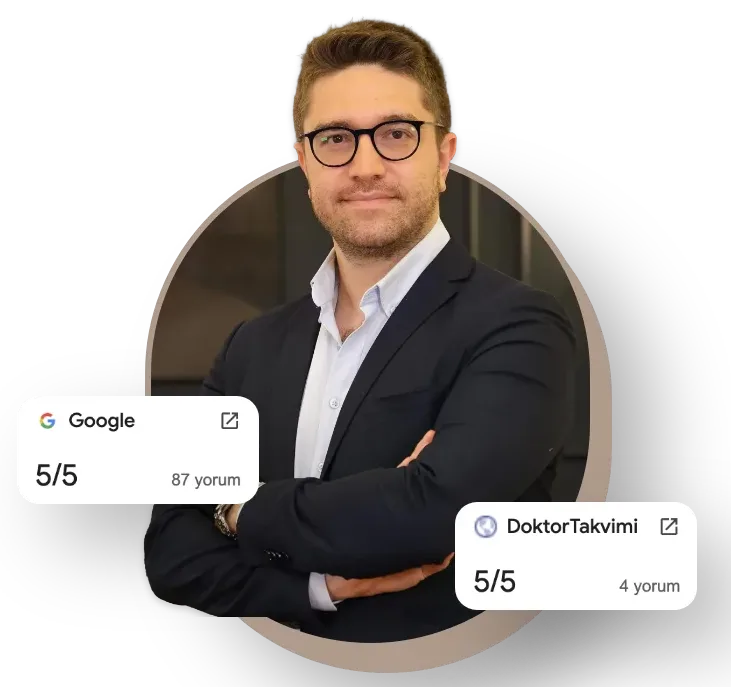
Op. Dr. Erman Ak is an internationally experienced specialist known for facial, breast, and body contouring surgeries in the field of aesthetic surgery. With his natural result–oriented surgical philosophy, modern techniques, and artistic vision, he is among the leading names in aesthetic surgery in Türkiye. A graduate of Hacettepe University Faculty of Medicine, Dr. Ak completed his residency at the Istanbul University Çapa Faculty of Medicine, Department of Plastic, Reconstructive and Aesthetic Surgery.
During his training, he received advanced microsurgery education from Prof. Dr. Fu Chan Wei at the Taiwan Chang Gung Memorial Hospital and was awarded the European Aesthetic Plastic Surgery Qualification by the European Board of Plastic Surgery (EBOPRAS). He also conducted advanced studies on facial and breast aesthetics as an ISAPS fellow at the Villa Bella Clinic (Italy) with Prof. Dr. Giovanni and Chiara Botti.
Op. Dr. Erman Ak approaches aesthetic surgery as a personalized art, tailoring each patient’s treatment according to facial proportions, skin structure, and natural aesthetic harmony. His expertise includes deep-plane face and neck lift, lip lift, buccal fat removal (bichectomy), breast augmentation and lifting, abdominoplasty, liposuction, BBL, and mommy makeover. He currently provides safe, natural, and holistic aesthetic treatments using modern techniques in his private clinic in Istanbul.