What Are the Main Differences Between Mini Tummy Tuck and Full Tummy Tuck?
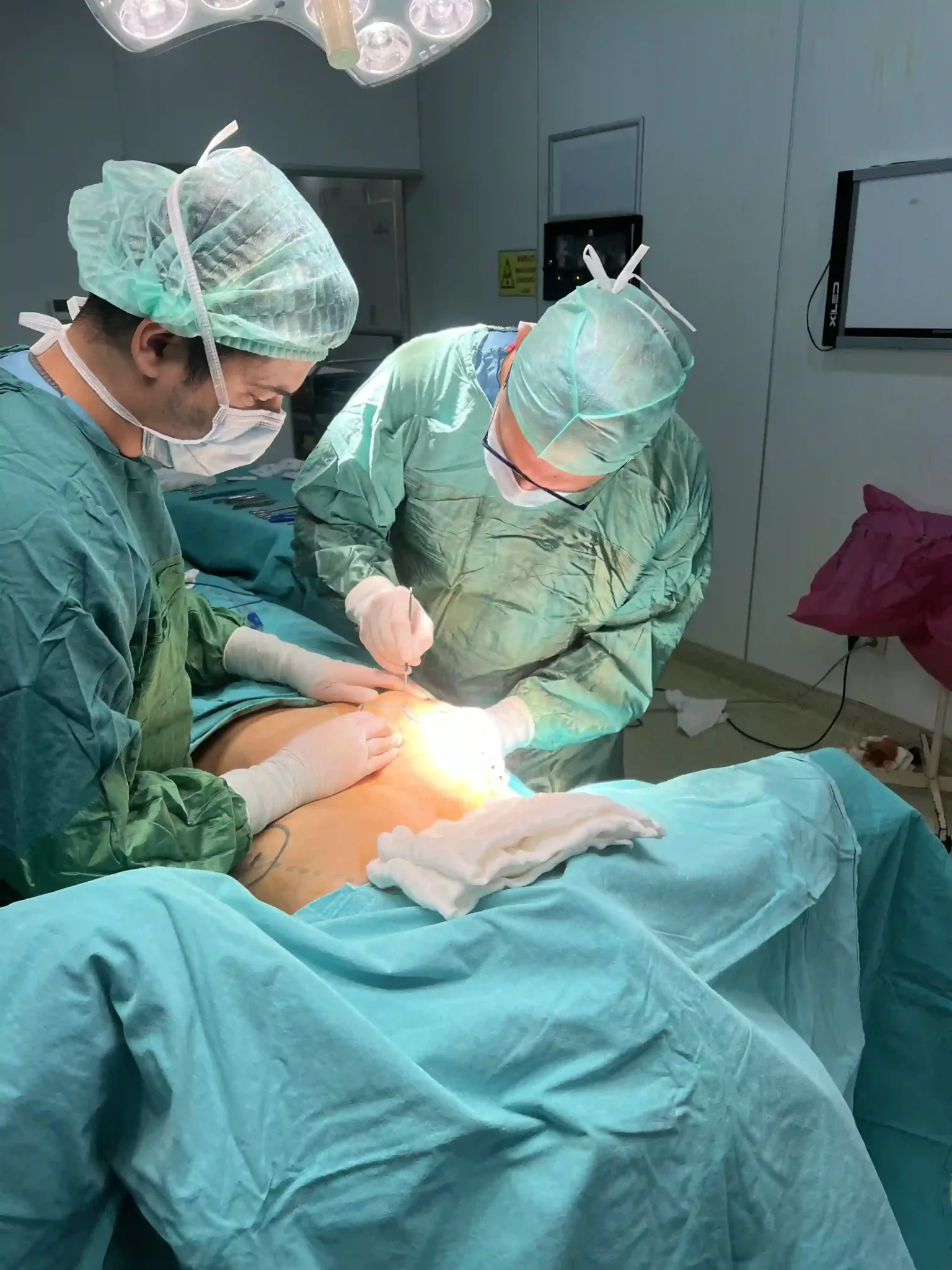
One of the most frequently asked and confusing points for our patients is the distinction between mini tummy tuck and full tummy tuck. The difference between these two procedures is not limited only to the length of the incision; there are also clear distinctions in terms of surgical planning, the size of the area addressed and the results obtained. In full tummy tuck surgery, the surgical field covers the entire abdominal wall, starting from below the rib cage and extending down to the groin area. This broad approach is necessary to correct severe sagging that occurs throughout the abdomen after significant weight loss or multiple pregnancies.
In mini tummy tuck surgery, however, the focus is much more specific. The procedure is limited to the area below the navel. The targeted area is the tissue between the navel and the pubic bone. Mild skin excess, stretch marks and fat deposits in this region are the main concerns. The most obvious difference is the length of the surgical incision. While full tummy tuck requires a long incision extending from one hip bone to the other, the incision in mini tummy tuck is much shorter. This incision, which we can generally describe as a slightly longer version of a C-section scar, is positioned low enough just above the groin area to be hidden under underwear or a bikini line.
Another important difference is the situation of the navel. In full tummy tuck, since the abdominal skin is pulled completely downward, the position of the navel is changed and a new navel is created by making an incision around it. In mini tummy tuck, on the other hand, in the classic approach the navel is not touched, its position is not changed and there is no stitch mark around it. However, in some advanced techniques, the navel can be temporarily released in order to repair the abdominal muscles from higher up, but still no circular scar is left as in full tummy tuck. This offers a major aesthetic advantage, especially for patients who do not want a scar around the navel.
Is Liposuction Used During This Surgery?
In modern aesthetic surgery, seeing tummy tuck surgery merely as a “skin removal” procedure is a major shortcoming. In the past, these operations were performed only by cutting and removing the sagging skin, but today they have been replaced by much more comprehensive and “hybrid” approaches. When performed alone, the mini tummy tuck procedure may sometimes be insufficient and may fail to provide the desired contours of the body. For this reason, in our current practice, we almost always combine this surgery with liposuction within the concept of “lipoabdominoplasty”.
The role of liposuction in this process is not only to remove excess fat. Liposuction integrated into tummy tuck surgery dramatically improves the surgical results. Firstly, liposuction applied to the waist area, the sides of the abdomen and the upper abdomen accentuates the waist curve and creates a slimmer silhouette. It is not enough to remove only the excess in the front; the torso needs to be reshaped as a whole.
In addition, liposuction provides the advantage of “lipomobilization” from a surgical technique standpoint. Thinning the fat tissue under the skin allows the tissues to be released and move more easily. In traditional methods, in order to pull the skin downward, it was necessary to cut and separate the tissues, whereas with the support of liposuction, the tissues are loosened while preserving the blood vessels and nerve structures. In this way, a “sliding flap” effect is created. Skin with an intact blood supply can be safely stretched downward. This technique minimizes the risk of sensory loss and circulation problems after surgery.
Can Laxity of the Abdominal Muscles Be Corrected with Mini Tummy Tuck?
Another common misconception is that mini tummy tuck surgery is insufficient for repairing the abdominal muscles. The condition known as “diastasis recti” is the separation of the vertical abdominal muscles due to pregnancy or weight gain. This leads to a bulging appearance in the abdominal area and cannot be corrected with exercise.
In classic mini tummy tuck techniques, the surgeon’s working area was limited, so only the muscles below the navel could be stitched. However, thanks to advances in medical technology and surgical techniques, this limitation has been overcome. With endoscopic-assisted techniques or modified methods such as the “floating umbilicus”, it is now possible to reach the muscles above the navel through a mini incision.
In these advanced techniques, the surgeon releases the navel from its base and creates a tunnel upwards. In this way, it is possible to reach up to the lower edge of the rib cage and repair the abdominal muscles from top to bottom. Thus, mini tummy tuck is not only a skin-tightening procedure, but also a functional abdominal wall repair. Bringing the abdominal muscles together at the midline flattens the abdomen and narrows the waist, as if wearing an “inner corset”. However, for this to be possible, the patient’s anatomy must be suitable and the surgeon must be experienced in this technique.
Who Are Ideal Candidates for Mini Tummy Tuck?
As with every aesthetic surgical procedure, the key to success in mini tummy tuck surgery is correct patient selection. Although the word “mini” may sound more appealing to patients, this technique does not offer a suitable solution for everyone. A mini tummy tuck performed on the wrong patient can lead to inadequate results and disappointment.
Ideal candidates are usually individuals whose general body mass index is normal or near normal. The main problem of these patients is localized fat accumulation under the navel and mild skin laxity that does not go away no matter how much they diet.
The main features sought in candidates are:
- Normal body weight
- Fat accumulation below the navel
- Mild skin laxity
- Stable weight
Realistic expectations
The most critical point here is the location of skin laxity. If the patient has evident skin sagging, folding or intense stretch marks above the navel as well, mini tummy tuck will be insufficient to solve this problem. If only the lower abdomen is tightened in a patient with excess skin in the upper abdomen, bunching or rippling can occur above the navel. Therefore, patients whose problem is limited to the area below the navel benefit the most from this procedure.
In addition, patients must be in good general health. Smoking is a serious obstacle to this surgery. Smoking impairs microcirculation, delays wound healing and increases the risk of tissue loss. Therefore, quitting smoking before the operation is essential. Women who plan pregnancy in the future are also advised to postpone this surgery, because a new pregnancy may cause the repaired muscles to separate again and the skin to become lax once more, negatively affecting the surgical result.
Which Tests Are Performed During the Preoperative Preparation Period?
The preparation process that begins after the decision for surgery is made is of great importance for the safety and comfort of the operation. During this period, a detailed medical history of the patient is taken and the current health status is evaluated. The preparation phase is not limited only to tests performed in the hospital; the patient is also expected to make certain lifestyle changes at home.
The following tests should be performed before surgery:
- Complete blood count
- Biochemistry tests
- Coagulation tests
- Anesthesiology consultation
- ECG
Patients are asked to stop using medications and supplements that may increase the risk of bleeding at least two weeks before surgery. These substances, which affect the blood clotting mechanism, may increase the risk of bleeding or bruising during and after the operation.
The following should be discontinued:
- Aspirin
- Vitamin E
- Ginseng
- Ginkgo biloba
- Fish oil
- Green tea
- Cherry stem tea
- Blood thinners
In addition, maintaining a healthy diet, drinking plenty of water and preparing the body for the operation positively affect the recovery process. Eating and drinking should be stopped after midnight before surgery. It is also important for patients to choose comfortable clothing when coming to the hospital and to arrange for an accompanying person for logistical support.

 Deutsch
 Türkçe
 Nederlands
 Français
 Svenska